
Center for Knowledge and Research of Palestinian Art
Osama Said
Osama Said
Year of Birth: 1957
Place of Birth: Nahef
Place of Residence: Nahef and Berlin
The painter Osama Said was born in the village of Nahef and currently lives in Nahef and Berlin. He is the eldest child in his family, the first generation born after the Nakba. Said grew up in a reality characterized by contrasts between tradition and modernity, Arab culture and Jewish culture, Palestinian identity and Israeli society. He was born when his family lived in a mud-built house located in the old center of Nahef village, and grew up in a modern stone-built house to which the family moved. The house was built among fields and orchards, where he would draw shapes in the sand using sticks and stones. He recounts that “The soil was my first newspaper” (1).
In the 1970’s Said studied painting with the artist Abed Abdi in his atelier in Kfar Yasif. In 1981 he began his studies at The Academy of Arts (Akademie der Künste) in Berlin, where he earned his Bachelor of Arts and Master of Arts degrees. He lived in Germany until 1988, after which he returned to Nahef. He currently lives and works in both places.
In his paintings Said creates a unique synthesis between the Palestinian village in the Galilee and the German expressionist painting tradition and North-European painting. The influence of German artists is prominent in his works, for example the Die Brücke ("The Bridge") German Expressionist art group (1905-1913), Max Beckmann, Anselm Kiefer, and Gerhard Richter, characterized by bold colors, multiple layers, and large-scale abstract compositions. The influence of the artists of the CoBrA movement (1948-1952), and of the artist Christiaan Karel Appel and the Danish artist Asger Jorn is also visible (2).
At the same time, his paintings were created out of his yearning for his homeland, Palestine, and preserve his grandfather’s stories about the catastrophe the Palestinians and the family experienced in 1948, and the land expropriation in its aftermath. The olive orchard which belonged to his grandfather was expropriated and the industrial zone of the city of Karmiel was built on it. “My grandfather would tell me how he brought the small seedlings on a donkey from the other side of the mountain, then on the same donkey he brought them water in large tin cans. These stories are like small seeds sown in me. Now they are beginning to emerge” (3).
Said paints using oil paints, acrylic and coal on canvas, fabric, cardboard and paper, and also combines stone, wood, metal, olive pomace and plaster in his artwork. He paints thick layers, created with free brush movements, that combine rich textures and bold colors. His works blend magical realism with expressionism to create surrealistic expanses. As a starting artist he used figurative images of childhood landscapes, houses and olive trees, after which his style became increasingly more abstract. Recurring motifs in his paintings include trees that were cut down, houses that were destroyed and figures lost in the dark, conveying an experience of loss, erasure and alienation.
Said’s works have been displayed in a large number of solo and group exhibitions in Israel and around the world.
- Ami Steinitz, Materials of Time in the Works of Osama Said”, Erev Rav, 19 June 2017.
- Taly Cohen Garbuz, “Between Nahef Village and Berlin”, Ynet culture, 9.9.08
- Osama Said, curator: Dr. Nava Sevilla-Sadeh, “The Blooming of Spring”, Umm el-Fahem Art Gallery, El-Sabar Association.
Sources
Artist Website – https://osama-said.com
Exhibitions – מתוך אתר האמן
Catalogs –
גברים בשמש, תערוכה קבוצתית, אוצרים: טל בן צבי וחנא פרח כפר בירעים, מוזיאון הרצליה לאמנות עכשווית, 2009.
פריחת האביב, תערוכת יחיד, אוצרת: נאוה שדה סביליה, הגלריה לאמנות אום אל-פחם, עמותת אלסבאר, 2013
Feature Stories and Articles –
"אוסמה סעיד", ויקיפדיה
אבו שקרה, פריד (2015). זהות האמן הפלסטיני, הגלריה לאמנות אום אל-פחם, עמותת אלסבאר
רעות ברנע, האדמה בוערת: תערוכה של האמן אוסמה סעיד", כלכליסט, 11.5.2017
ראיון עם האמן בעקבות תערוכתו בעפולה, על הקשרים בין אמנותו לבין חייו.
טלי כהן גרבוז , בין כפר נחף לברלין, ynet , 9.9.08
Interview in honor of the exhibition "Casting its Shadow Far Ahead" at the Kibbutz Gallery
נאוה סביליה שדה, "פריחת האביב – אוסמה סעיד”, קטלוג תערוכה, הגלריה לאמנות באום אל-פחם, דמטר, 2024
From the catalog of the exhibition displayed at the Umm el-Fahem Art Gallery
עמי שטייניץ, "חומרי הזמן ביצירתו של אוסמה סעיד", ערב רב , 19.6.17
Ami Steinitz about “Land Work”, Osama Said’s exhibition at the Afula Gallery
Osama Said: Palestinian Artist, Zawyeh Gallery
About the artist and his artwork
Osama Said – A Language as Brave as Spirit, Osama Said
The artist’s work as a brave and spiritual language, socially and politically
ميموزا العراوي،
«اللون هو المضمون والأداة في معرض الفنان الفلسطيني أسامة سعيد». العرب, 2024
Color as a means and as content in the artist’s works
أسد عزّي،
«ألوانُ طاووسٍ ومخالبُ هرّ: معرض "سماء مكشوطة" للفنان أسامة سعيد», 22.5.16
The artist Asad Azi about Osama Said’s exhibition “A Scraped Sky”
حسني خطيب شحادة،
«أسامة سعيد بالجفت والرماد يكتب تاريخه». عرب 48، 26.5.16
The scholar Housni Alkhateeb Shehada about the artworks of Osama Said, as visual inscription of Palestinian history
مليحة مسلماني،
«أسامة سعيد… من تفتح الربيع إلى تفتح الروح». ضفة ثالثة، 11.4.22
Maliha Muselmani about Osama Said’s artwork
Interviews –
Al Falastiniah TV – YouTube, 28.5.2015
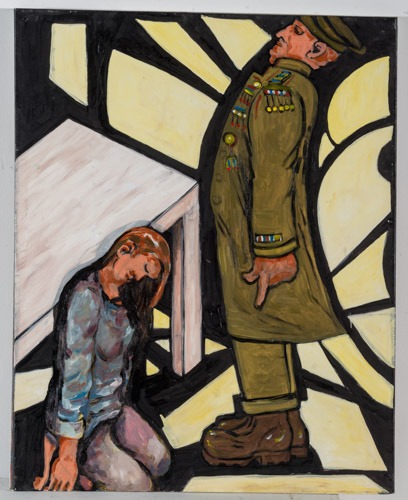
Osama Said
The Dictator, 2012
acrylic on canvas, 100X80 cm
Ahmad Canaan
Ahmad Canaan
Year of Birth: 1965
Place of Birth: Tamra
Place of Residence: Tamra
Ahmad Canaan is a multidisciplinary artist and curator. He was born in Tamra in the lower Galilee to Mahmoud Mohi Eldin, a carpenter, and Doria Labadi from Haifa. His father passed away when he was two and half years old, and his mother raised him and his five siblings alone. He grew up in rural traditional and agricultural surroundings, however his high school education began at the agricultural school Kfar Galim youth village and then at Ironi Alef high school in Haifa. During these years he took his first steps in sculpture and painting, inspired by the works of the painter and sculptor Gershon Knispel, and influenced by art exhibitions displayed at Beit HaGefen in Haifa (1). In the years 1984-1985 he studied art at the studio of the artist Khalil Rayan, one of the veteran Palestinian artists in Israel. He then continued his studies at the Bezalel Academy of Arts and Design in Jerusalem where he earned his BFA degree in 1989. In 2009 he received a diploma in Museology and Critical Curation from Tel Aviv University.
Canaan worked in a bronze statue factory in Jerusalem for five years, and lectured on sculpture at the Academic College of Sakhnin and at the Nasra College of Arts and Science. He also managed the municipal gallery of art in Tamra, and founded the Canaan Gallery in Tamra, which serves as a platform for local artists to exhibit their artwork (2). Canaan is the founder of the Tel Kisan Association for Culture and Arts and is a member of the IBDAA Association. He has won several awards and has had many solo exhibitions. He has also participated in numerous group festivals and exhibitions in different countries. His works have been acquired by museums and his sculptures placed in public spaces in a variety of countries, among them the UAE, Jordan, Germany, Poland, China, Egypt and Lebanon (3). In 1989, Canaan received the America-Israel Cultural Foundation Prize, and in 2003 and 2010 the Artist in the Community Grant from the Israeli Ministry of Culture. He has participated in group exhibitions and international symposiums in the Middle East, Europe, Japan, Russia and the United States.
In his artwork Canaan explores Palestinian identity, heritage and collective memory after 1948. He combines traditional Palestinian and Middle Eastern motifs with a modern symbolic-narrative style. Cultural symbols such as olive trees, keys, dabke dances and images of refugees connect personal memory with the collective experience. His interest in mythology and ancient cultural heritage – particularly what can be called “modern Canaanite” aesthetics – is also visible: some of his works use ancient images and mythical symbolism, and combine them with current realities in order to examine identity, memory and belonging. Canaan often draws on elements of Islamic art – geometric patterns, designed shapes and ornamentation – which he reinterprets in contemporary compositions.
Canaan works in a range of mediums – painting, sculpting in bronze, wood, clay and mixed media – and combines abstract and figurative styles with Islamic geometric motifs and images. This range of techniques and materials enables him to freely navigate between personal intimate images (family portraits and scenes), symbolic art, and wide ranging public sculpture.
- “Ahmad Canaan”, Wikipedia.
- Ahmad Canaan, Dalloul Art Foundation (DAF), DafBeirut.org.
- https://www.artsy.net/artist/ahmad-cannan
Sources
Artist Website – https://www.ahmadcanaan.com/
Exhibitions – מתוך המאגר של מרכז המידע של מוזיאון ישראל, ירושלים
Catalogs –
مشاطيح, مركز إحياء التراث العربي, 1992
אחמד כנעאן – פסלים, אוצרת: רותי אופק, המוזיאון הפתוח, גן התעשיה עומר, 2011
ציורים נבחרים : 2006-2015 / אחמד כנעאן, תרגום ועריכה: נביל ארמלי, [טמרה] : כנעאן – גלריה לאמנות, 2015
Books –
كنعان، أحمد، أعمال تشكيلية : 1989-2002 / أحمد كنعان, [اسرائيل] : [اسم الناشر غير معروف]، 2003
كنعان، أحمد, الفارس / أحمد كنعان., شفاعمرو : مطبعة المشرق, 2008
רשימות ומאמרים –
"אחמד כנעאן", ויקיפדיה
מלר ימגוצ'י, שיר. "מבעד לאורנמנט – אחמד כנעאן ואמנות האסלאם", מוזיאון וילפריד לאמנות
The text examines the connection between the motifs in Canaan’s artwork and the collection of Islamic art at the Wilfrid Israel Museum
רענן, זיוה. "דברים שרואים משם לא רואים מכאן – ביקור בסטודיו של אחמד כנעאן", שמתי לב, 27.11.2016
Impressions from a visit to the artist’s gallery
Ahmad canaan, Dalloul art foundation
Reading into Ahmad Canaan’s art through the concept of light
Nasrallah, Aida (2007). The Dreamer Knight
About the motif of the knight as a central symbol in Ahmad Canaan’s artwork
Nasrallah, Aida, Ahmad Canaan: The Transition from the Allegorical Woman to the Woman of the Daily Life
An article examining the development of the woman’s image in Ahmad Canaan’s artwork
Shoshani, Nava. Techniques in Canaan's Work
An article analyzing Canaan’s artistic language from the perspective of materials and techniques
مسلماني, مليحة. " الفنان أحمد كنعان: بين تراجيديا الواقع وجماليات الموروث", الرايبي/الرايبي الجديد – Diffah, 6.2.23
The article examines the question of the artist’s identity through motifs from Canaanite culture
"إنسانيّة محاصرة | معرض رقميّ", فُسْحَة – ثقافيّة فلسطينيّة، 24.9.22
Examines the sculptures in the exhibition “Humanity under Siege” on a digital platform
Interviews –
Ahmad Canaan/ Palestinian Artist”, 12.1.17
The artist Ahmad Canaan discusses his artwork from his studio
"الفنان احمد كنعان", برنامج 48 Iman Jabbour
An interview with the artist Ahmad Canaan
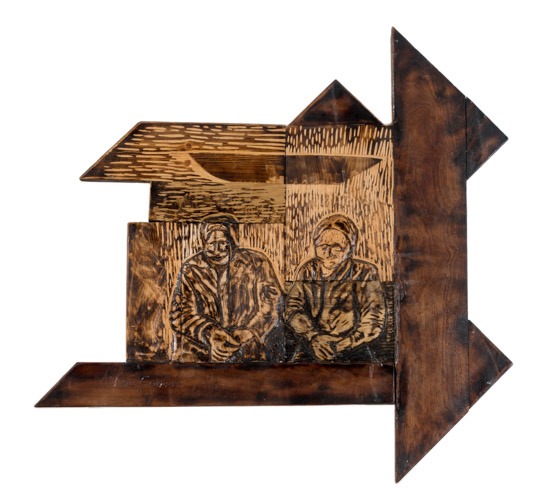
Ahmad Canaan
Nostalgia for Haifa, 2020
wood, 5X130X120 cm
Amira Ziyan
Amira Ziyan
Year of Birth: 1977
Place of Birth: Yarka
Place of Residence: Yarka
Amira Ziyan was born in the Druze village Yarka to a religious family of twelve children. Her father, Qassem, owned a concrete factory and was a dominant figure in the life of the family. So much so that after his death his room remained as he left it, even his clothes where he had hung them, as if his family was waiting for him to come home from work (1). The father’s presence, as well as the sense of his absence, are strongly palpable in Ziyan’s personal memories. Loyal to her father’s way of life and belief system, purity and family honor are a central theme in Ziyan’s work, accompanying her, as she notes, since childhood. She says that she remembers nothing of her childhood, and only focuses on the present. According to Gilad Ophir, who in 2018 curated her first exhibition at the Umm el-Fahem Art Gallery, her memory is deceptive, as if every time anew a veil descends which removes, conceals, erases or stores the past in her subconscious (2). He finds contradicting feelings and desires in her works: on the one hand a desire to preserve tradition and a sense of belonging, and on the other hand a desire to break through the barrier of repression, which verges on a sense of displacement.
Amira Ziyan graduated from Ahva Yarka high school. In childhood she faced many restrictions as a woman, yet nonetheless decided to pursue a higher education. “I paid money and enrolled in studies, but did not tell my parents. I informed them only one day before the start of my studies that I was going and that I couldn’t get my money back” (3). Ziyan enrolled in Industrial Chemical Engineering studies at Western Galilee Academic College, and in 1999 completed her studies as a chemical practical engineer. In 2003 she received a teaching certificate in administration from WIZO College in Haifa. In 2004 her father suffered a stroke, and her brother, who owned a photo development lab, had to take the father’s place at the concrete factory and asked Ziyan to help in the photography shop. Work in the shop sparked her interest and encouraged her to specialize in photography. Thus she understood that her heart was somewhere else: “I lacked awareness about who I was and had no one to guide me. But when I touched art I felt a voice in me saying that this is who I am” (4).
In 2010 Ziyan received her BA in the Fine Arts department and the French Studies department at the University of Haifa, and continued her studies towards a master’s degree. During her studies she excelled in photography and won prizes and grants, among them the Saar Efroni Artist Grant (2008), the Shpilman International Prize for Excellence in Photography awarded by the Shpilman Institute for Photography (2009), and the Outstanding Master’s Thesis award by the Friends of the University of Haifa (2010). After completing her studies she continued to be recognized for her artistic achievements. She received a grant from Mifal HaPais, the national lottery of Israel, for a solo exhibition at the Umm el-Fahem Art Gallery (2016), the Prize for the Encouragement of Creativity in the Plastic Arts from the Israeli Ministry of Culture and Sport (2017), an Honorable Mention Becky Dekel Prize from the Association for Women’s Art and Gender Research in Israel (2020), and the Oscar Handler Award from Kibbutz Lohamei HaGetaot (2022), among other awards and prizes. Her artwork is included in a variety of collections, among them the Knesset Art Collection, the Haifa Museum of Art, the Umm el-Fahem Art Gallery, the Alexander Tutsek Foundation in Munich, as well as in private collections in Israel and around the world (5).
Amira Ziyan has taught art since 2013 at the Al-Ruya middle school in Yarka, her place of residence. In 2022 she also opened her own studio and gallery in the village. Between the years 2012 to 2024 Ziyan was a member of the joint Jewish-Arab art Gallery in Kabri.
Amira Ziyan’s artwork focuses on staged photography, aware of both narrative and symbolic dimensions: “I build my works as a composition in which the photograph, the colors and everything in the frame has a very specific purpose, while evoking the symbolic narrative I want to convey. I always say that I want to create a photograph that the viewers can ‘read’. As a woman from Yarka village and the Druze community, my works are a response to the two worlds which I am torn between: the modern and the traditional. At the center of my artistic process is a ‘stage’ of sorts which I create for the photographed scenes” (6).
Amira Ziyan’s photographs focus on present-absent female figures. She extensively documents women in contemporary Druze society, but blurs their image and conceals parts of their body. The portraits she creates are composed of objects, which cover but also complement the figures. In this manner she deals with topics relating to social-cultural identity in Druze society and to the gender-female issue in her surrounding reality.
In her photographs Ziyan emphasizes the mystery and contrasts she finds in women’s body: what is and is not, what is permitted and prohibited, gained and lost, black and white. These are the ideas that drive her choices in the photographs she stages (7). In the series “Trespassing” (2020), for example, a woman is shown covered in red velvet fabric, which both conceals and exposes at the same time. For the artist, the color red combines contrasts between beauty and fear. On the one hand symbolizing blood, violence and punishment, and on the other love, passion and romance.
In the exhibition “On Bare Concrete”, displayed at the Kabri Gallery in 2016, Ziyan presented 12 photographs in different formats. In a series of meticulous and staged photographs, in which she is present, disappears and deceptive, Amira Ziyan takes us into her conflicted – yet complete, inner world. Air, wind and concrete combine and compete between them in an encounter that only seems possible in her world. The figure of the father, who was the most influential and significant figure in Amira’s life, is present and a common thread through all her works, even if he is not visible, as in the work showing a portrait of a young girl against a concrete background. The concrete, in its various shades, appears as a recurring motif in her photographs, and raises questions about the permanent and the temporary, about remembering and forgetting. These works raise the question of whether the concrete is just a thin and unstable layer only several centimeters thick, or reinforced concrete built as a stable foundation (8).
Ziyan presented her first solo-exhibition, “Crystal Palace”, at the Umm el-Fahem Art Gallery in 2018. In this exhibition she listened to the experiences of Druze women, in childhood and in adulthood, as single and as married women, as daughters, mothers and spouses. In her exhibition “Beyond the Body” at the Wilfrid Israel Museum (2021) Ziyan collected stories of remembrance from members of the Druze community. In keeping with the subject of the exhibition, reincarnation, here as well she delves into and examines questions about presence and absence, materiality and dissipation, in her society.
In her artwork Ziyan prioritizes questions that center on the concept of “culture’ as an aesthetic category for examining and understanding the society and social habitus in which she works. The aesthetic and artistic space offers the possibility to reconcile nature and humankind, and makes room for voices not heard or expressed in other spaces of discourse (9).
- Said Abu Shakra, Amira Ziyan: Crystal Palace, Exhibition Catalog, curator: Gilad Ophir, Umm el-Fahem Art Gallery, El-Sabar Association, 2018, p. 21.
- Ibid.
- Orin Weinberg, “I gave up my private life for my art”, ynet, 15.2.18
- Ibid.
- “Ziyan Amira”, Photography House: The Center for Research and Documentation of Local Photography, MUZA, Eretz Israel Museum
- “Amira Ziyan”, the artist’s website
- Sigal Barkai, “Trespassing”, artist’s website
- Avshalom Levi,”Amira Ziyan: On Bare Concrete”, Kabri Art Gallery website, May 2016
- Muhammad Farhan, “Crystal Palace: Solo Exhibition of Amira Ziyan curated by Gilad Ophir”, Shenkar – Engineering, Design, Art, 22.2.18
Sources
Artist Website – https://www.amira-ziyan.com/he
Exhibitions – מתוך אתר האמנית
Articles –
"אמירה זיאן", ויקיפדיה
"זיאן אמירה", הבית לתיעוד: המרכז לצילום ומחקר של צילום מקומי, מוז"א
סעיד אבו שקרה, אמירה זיאן: ארמון הבדולח, קטלוג תערוכה, אוצר: גלעד אופיר, הגלריה לאמנות אום אל-פחם, עמותת אלסבאר, 2018 –
An article from the catalog of the exhibition “Crystal Palace”, underscoring the tension in Amira Ziyan’s work between tradition and the search for a personal and creative voice in the Druze community. The article discusses the way Ziyan uses photography to create a metaphoric “crystal palace”, a space in which the experiences and memories that do not have a voice in the public discourse are formed
סיון קלינגבייל, "יום בחיי אמירה זיאן, כל בוקר מתחיל במפגש משפחתי על (שתי) כוסות קפה", הארץ, 11.2.20
The article describes a day in the life of Amira Ziyan, and focuses on her relationship with her family, on the impact of her life on her art, and on the balance she seeks to create between tradition and art
אוריון ויינברג, ״ויתרתי על החיים הפרטיים בשביל האומנות״ynet ,15.2.18
An interview with Amira Ziyan about choosing to pursue art, the cultural and social limitations in Druze society, the focus on the female body, and the need to give a voice to the everyday life of women in Druze society
קרני עם-עד, "הצלמת הדרוזית שמורדת במסורת הפטריארכלית", הארץ, מוסף גלריה, 11.7.2016
An interview with Amira Ziyan about her choices in life, about the decision to remain single and in what way this choice shaped her life, her view of life and her art. Ziyan is portrayed as someone who rebels against the patriarchal tradition of the Druze community, and whose artwork challenges social roles and gender expectations
Muhammad Farhan, "ארמון הבדולח: תערוכת יחיד לאמירה זיאן באוצרותו של גלעד אופיר", שנקר – הנדסה. עיצוב. אמנות, 22.2.18
The text presents the exhibition “Crystal Palace” which was displayed at the Umm el-Fahem Art Gallery in 2018. The exhibition developed out of conversations between the artist and Druze women, who shared experiences about their life, in childhood and adulthood, about their social roles and their status as single, married and women with families
סיגל ברקאי, "מסיגות הגבול", אתר האמנית
The text discusses the series of works in Amira Ziyan’s exhibition “Trespassing” , and the study of the female body from a sociocultural perspective. In her works, Ziyan presents contrasts and opposites in the aim of challenging boundaries and conventions and examining women’s place in society and culture
אבשלום לוי, "אמירה זיאן: על בטון חשוף", אתר גלריה כברי, מאי 2016
The text, written by the curator of the exhibition “On Bare Concrete”, discusses the meaning of concrete in Amira Ziyan’s works. He suggests viewing the concrete as a metaphor for the tension between the permanent and the temporary, between past memories, liberation and striving for self-realization
“Amera Zayan, ”All4Palestine
The artist’s CV and a list of her exhibitions, in a website that presents the achievements of Palestinian intellectuals in the fields of culture, art, science and sport
"מבעד / Beyond / من خالل", המכון לאמנויות תל חי, יוני 2023
The catalog of the exhibition “Beyond: Amira Ziyan”, curated by second year students in the Plastic Arts department at Tel-Hai Arts Institute, as part of a course in curation taught by Michal Shachnai Yaakobi
Interviews –
לאה פיש, "על הנגלה והנסתר ביצירתה של הצלמת אמירה קאסם זיאן", מרכז חדרים לתרבות יהודית ישראלית, 4.10.2020
Leah Fish talks with Amira Ziyan about sociocultural identity and about women in Druze society
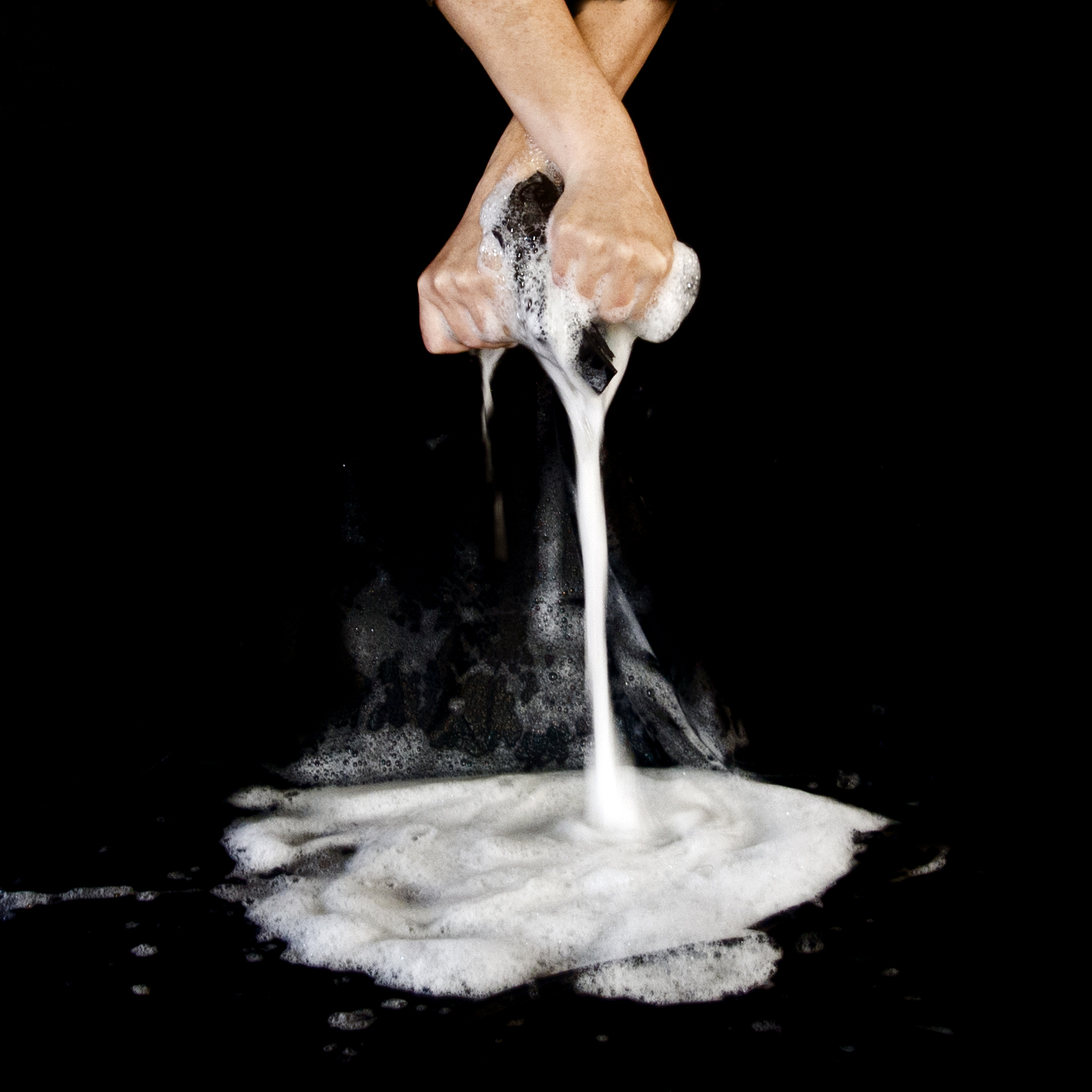
Amira Ziyan
Shirin, 2017
photography, 100X100 cm
Anisa Ashkar
Anisa Ashkar
Year of Birth:1979
Place of Birth: Acre
Place of Residence: Acre and Tel-Aviv
Anisa Ashkar lives and works in Acre and Tel Aviv. She was born in 1979 in the Barbur neighborhood (Basatin El-Armel) in Acre to a large Muslim family with many children. She was drawn to art at a young age and when she was 9 years old began to take calligraphy lessons – considered a male-exclusive field, from a traditional calligraphy artist (1). At the age of 14 she began to study the history of art and design at the Christian high school in I'billin in the lower Galilee. Between the years 1998-2000 she studied Art at Western Galilee College, and then went on to earn a Bachelor’s degree in Art at the Hamidrasha School of Art at Beit Berl College. Ashkar taught, and continues to teach, in numerous frameworks, among them Minshar School of Art, Shenkar College of Engineering, Design and Art, Bezalel Academy of Arts and Design, the Arab-Jewish Community Center in Jaffa, and ORT Akko. Her artistic undertakings are continuously accompanied by her involvement in educational work, which is an inseparable part of her professional identity.
Ashkar is an inter-disciplinary artist who explores questions of identity, social criticism and gender. Through painting, photography, performance and installation she creates a fantastic, dream-like world that is directly connected to changes in the socio-political climate and serves as a means of discussing culture and society. Her trademark is the calligraphy she writes on her face. She writes a sentence in Arab calligraphy on her face every day, visible to all, but only understood by some. This artistic practice encourages the viewers to engage in a conversation with her and to learn about diversity, her biography, and Arab-Palestinian identity (2). At the start of her career Ashkar would write lines from the poetry of Mahmoud Darwish and from the writings of the Syrian writer Mohammad Al-Maghout, for example “Freedom is taken with claws and teeth” (3).
Besides calligraphy, Ashkar’s forms of art include performance, painting, video art, conceptual art, and sculpture. Many of her works are based on mythological female figures and on symbolic animals such as horses and swans. She has displayed her art in numerous exhibitions throughout Israel, among them at the Hagar Art Gallery (2003), the Arab-Hebrew Theater in Jaffa (2004), the Artists House Tel Aviv (2008), Haifa Museum of Art (2011), and the Museum of Islamic and Near Eastern Cultures in Be’er Sheva (2017). Ashkar is the recipient of numerous awards in Israel and abroad.
Ashkar’s works focus on identity, body, gender and power relations in society, directly addressing women’s status as well as social and political mechanisms of control and oppression. In her video work “El Adham” she collaborates with a black man, and through planned movements and dances strives to represent the black noble horse, its style, unique qualities and technique. This poses the question of the difference and identity of the creation: a human being standing in front of the animal and performing its representation. Further in the work the artist washes the man’s body with milk. This process creates a sharp visual contrast between the man’s black and strong skin color and the white color of the milk. When the artist pours the milk on the body, the boundaries of color are blurred: the black turns white and the white goes back to being black in a continuous cyclical movement. Through this action the artist explores her body and central social issues, but chooses to do so through someone else’s body, the body of the man that is exploited and humiliated. The man is shown in embarrassing situations, reflecting the experiences women face in society: racism, power relations, fatherhood, control and the silencing of the Other’s voice (4). This work shows the body as controlled, subject to regulation, to judgment and to criticism, and as such reflecting a social reality in which women are subject to continuous examination and male control. The artist points to the overt and covert oppression mechanisms, and how society dictates roles, boundaries and norms, while silencing the individual voice and denying the possibility of free expression.
In the exhibition “Black Gold” (2017, curated by Dalia Manor and Sharon Laor Sirak), the artist blended narratives of Delft China from Holland with Arab history. Sea sand, gilded dates dangling from the chandelier hanging from the ceiling, blood-like beads in coffee mugs, the sounds of music and recorded conversations, come together in the exhibition to create a strong sensory experience (5). Through her video art and installations, Anisa Ashkar critiques the existing social order, and exposes the symbolic and physical violence carried out against the female body. Her work calls on the viewer to critically observe reality and to reexamine concepts such as identity, purity, control and freedom.
As a performance artist, Ashkar uses her body and physical presence as a means of expressing identity, gender and belonging. She combines ritual actions, bodily gestures and elements of writing on the body. In her works she uses oil paints, acrylic and spray on paper, but also everyday materials such as flour, butter and black coffee. Her works move between a range of mediums and techniques and flow from physical and biographical movement between cities and spaces – Jaffa, Tel Aviv, Acre and Paris – which become sites of identity, memory and foreignness (6). She is influenced by her personal experiences as a Palestinian woman in a multi-cultural environment, but also from Islamic tradition and Muslim art, particularly calligraphy.
“I begin my works with a gut feeling and avoid any rational analysis. I taste and smell, rub different materials on my skin and feel them on my body. Only then do I start a reflexive thought process about my work, and this is a very important part of it. Even though the political, ethnic, religious and gender meanings are already there, only afterwards do I conceptualize and articulate the ideas in thinking about them. In our culture, intuition – relying on the senses – is considered primitive, non-rational, inferior and unreliable compared to the qualities of Western masculine rationality which are above the senses… Also, I used the “minor senses” in order to symbolize that I am a minority in more ways… I am ever-changing, depending on where I am” (7).
- Dalia Manor and Sharon Laor Sirak, “Anisa Ashkar: Black Gold”, Museum of Islamic and Near Eastern Cultures, 2017.
- Anisa Ashkar, https://www.artsource.online/artists/anisa-ashkar
- Tal Dekel, Gender and Senses: The Art of Anisa Ashkar”, TOHU Magazine, 2.3.18
- Farid Abu Shakra, The Identity of the Palestinian Artist: Between Tradition, Culture, Modernization and Globalization, Umm el-Fahem: Umm el-Fahem Art Gallery, 2015
- Ibid
- “Anisa Ashkar: Dogs and More”, City Museum
- Tal Dekel, “Gender and Senses: The Art of Anisa Ashkar”
Sources
Artist Website – https://www.anisaashkarart.com/
Anisa Ashkar – Tel Aviv Artists' Studios
Exhibitions – מתוך אתר האמנית
Feature Stories and Articles –
אביב, נעמי. "צומוד – על אניסה אשקר והתערוכה 'זיפת'", מתוך: אניסה אשקר – זיפת (קטלוג), גלריה נלי אמן, 2012 –
The article examines the concept of “Sumud” (steadfastness/perseverance) as an existential, political and cultural stance. It shows how materiality (mainly tar), the body and the performative act are means used by Anisa Ashkar to express insistence on presence and identity, in a reality of pressure, erasure and exclusion
אלח'טיב שחאדה, חוסני. "ועכו תישאר בתודעה זו לנצח…: אניסה אשקר ושפת החיפוש אחר הסובייקטיבי: קריאה ביקורתית בעבודה של האמנית אניסה אשקר: זיפת ומיצבים אחרים." מתוך אניסה אשקר – זיפת (קטלוג). גלריה נלי אמן, 2012 –
The article discusses the way Anisa Ashkar develops a personal and subjective artistic language, that draws on the memory of place (mainly Acre) as a mental, cultural and political space. Ashkar’s work is presented as a process in search of identity, in which the body, the material, the smell, the writing and the performative action become tools for expressing the complex Palestinian identity experience. The article views Ashkar’s work as an act of quiet cultural resistance: an attempt to articulate presence, voice and subjectivity within a charged space, while using art as an act of consciousness, memory and insistence on identity
דקל, טל. "מגדר וחושים: האמנות של אניסה אשקר", מגזין תוהו, 2.3.18
The article analyzes the way in which Anisa Ashkar expands the boundaries of the artistic medium by activating different senses (sight, smell, touch and taste), and shows how the senses are employed as a means of expressing the Palestinian woman’s identity. The article emphasizes Ashkar’s use of the body and the face as sites of writing and action, and the transition from an art of objects to experiential and performative art
מנור, דליה, ולאור סירק, שרון. "אניסה אשקר: זהב שחור", מוזיאון לתרבות האסלאם ועמי המזרח, 2017
The curators’ text from the exhibition “Black Gold”. The name of the exhibition is a charged metaphor which carries contradicting meanings – wealth and economic power versus memory and erasure. Anisa Ashkar’s art is presented as a practice of senses and criticism, in which the material is not only aesthetic but also carries memory, power and cultural resistance
פאדיה הריש, חנין עתאמנה, [מנחה: אוה זוהר], אניסה אשקר: עבודת עבודת גמר עיונית ובוק באיפור,פסג"ה חדרה, המנהל למדע וטכנולוגיה ,משרד החינוך,יוני 2017
A final paper that analyzes Anisa Ashkar’s calligraphy works as an inspirational model for makeup
نزيهه سعيد, "الفنانه انيسه اشقر من عكا الى باريس..عباد شمس يبحث عن الضوء والحب",رصيف 22, 18 تموز 2019
A newspaper article following Anisa Ashkar’s time in Paris and the installation she created “Love Flowers”
Nava Sevilla-Sadeh, “Les Rites de Passage: Ritual, Initiation, and the State in Works by Sigalit Landau and Anisa Ashkar”, Visual Resources: an international journal on images and their uses, Volume 34, 2018
The article points to the characteristics of initiation and of ancient Dionysian rituals in the works of Anisa Ashkar and Sigalit Landau, and interprets them as metaphors of current rites of passage in the context of the Nakba and the displacement of the Palestinian refugees in 1948
Interviews –
חוסני אל-ח'טיב שחאדה, "האמנית שרצתה להיות ח׳טאטה (קליגרפית)! ריאיון עם האמנית אניסה אשקר", מכון ון ליר בירושלים הפורום לחשיבה איזורית, 16.5.23
An interview with the artist about the stations in her life, her art, calligraphy, and her sources of inspiration
גבי בר חיים,"האמנית אניסה אשקר עם כל האמת בפנים", NRG/מקור ראשון, 14.3.09
A comprehensive interview with Anisa Ashkar about her childhood in Acre, her life, art and educational activity
"אניסה אשקר כותבת על הפנים שלה משפט או מילה בערבית בכל יום", המכולה/גוף, כאן 11, 4.7.17
A video clip about the face calligraphy and painting in Anisa Ashkar’s art
"فن FUN مع شادي بلّان 3 | الحلقة 7"مكان, 22.09.2025
An interview for the television program “Fun with Shadi Ballan”, about Anisa Ashkar’s artistic career and the calligraphy writing that characterizes her art. Interviewer – Shadi Ballan 20.7.2023
Charney Media, "Tzumamen with Anisa Ashkar, Contemporary Artist", 29 September 2021
A recorded interview with Anisa Ashkar, about the face as a canvas on which she writes her ideas which embody her Arab identity
Studio David Wakstein, "David and Goliath – Art Talks: Anisa Ashkar (Big – Painting Camp 5), 5.9.15
A conversation with Anisa Ashkar about her participation in the exhibition “Painting Camp #5” at the Contemporary Art Station in Ramle in 2012
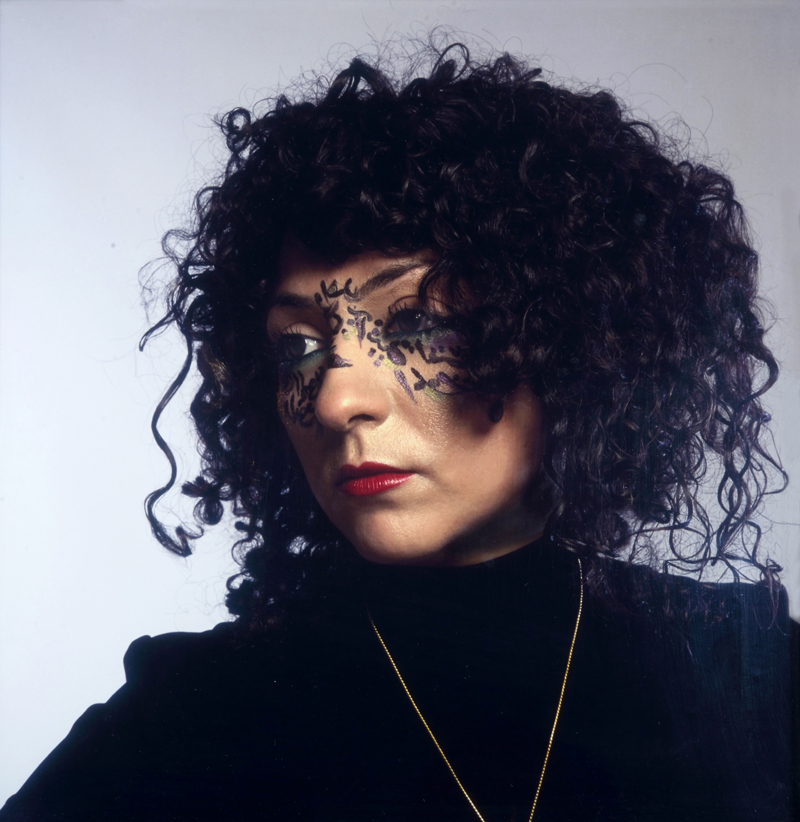
Anisa Ashkar
Wild Eyes, 2006
color photography
Asad Azi
Asad Azi
Year of Birth: 1955
Place of Birth: Shefa-‘Amr
Place of Residence: Jaffa
The artist Asad Azi is an Arab, Druze, Palestinian, Israeli painter and poet, as he defines himself (1). He was born in 1955 in the city of Shefa-‘Amr in the Western Galilee to a Druze family that hails from Syria and Lebanon. The first years of his life were shaped on the backdrop of a tumultuous political reality and of personal loss. His father took part in fighting against the Israeli military forces in 1948, and after the borders of the new state were established joined the Israel Border Police. He was killed from Syrian sniper gunfire in 1961 while on duty. This complex and paradoxical biography of his father, that spans different points of conflict and belonging, profoundly impacted the artist’s consciousness and contributed to forming his continuous exploration of questions about identity, belonging, and the conflict between them (2).
In addition to the death of his father, his mother lost two baby boys before giving birth to Azi, and to protect him from a similar fate would dress him in girl’s clothes. This was a formative memory and experience and material of central symbolic significance in his artwork. The mixing of gender identities, formed in the family setting and in the shadow of the fear of loss, is a recurring motif in his art which examines social classifications and forced identities (3).
Asad Azi grew up in a multi-cultural and multi-lingual environment, Druze-Arab-Israeli, navigating simultaneously between the Arab and Jewish spaces. He studied at a Jewish high school in Kiryat Ata, acquired knowledge of the Hebrew language and became part of the Israeli cultural discourse. After graduating from high school he served in the IDF, an experience that heightened the tension between his Arab-Druze identity and his Israeli identity as someone who served in the Israeli army. This complexity is the basis of an artistic language that rejects fixed definitions and prefers hybrid spaces (4).
Asad Azi enrolled in Art, Philosophy and Hebrew Literature studies at the University of Haifa in 1976, and earned a BA in Art in 1980. Influenced by classic and Middle-Eastern traditions, he chose to focus on sculpting in stone. He continued his studies at Beit Berl College and at Tel Hai Academic College, and pursued an MA in Art History at Tel Aviv University. He studied sculpting in marble in Carrara, Italy, where he was closely acquainted with the heritage of European classical art. This in-depth acquaintance with the history of western art enhanced the dialogue he conducted with western tradition, but also sharpened his critical stance about its attitude towards non-western or hybrid identities. His journeys around the world, including his stay in Nigeria, expanded his view of non-European visual cultures, and contributed to shaping his stance against one-dimensional artistic canons (5).
At the beginning of the 1980’s his art gradually transitioned from the medium of sculpture to that of painting, which became his main means of artistic expression. His focus on painting enabled him to develop a unique visual language which combines figurative images, texts, myths and personal memory. He drew inspiration from the history of Western art, but at the same time incorporated elements from popular Middle-Eastern culture, Druze symbols, Palestinian embroidery and Arab ornamentation (6).
Throughout his artistic journey, Asad Azi explores the concept of “otherness”, both as an expression of his personal situation, and as a socio-political reality. As a Druze-Arab artist who is active in Israeli cultural institutions, he always creates art from a position of existence on the edge of society. Thus, for example, in his works that focus on bureaucratic and social classification mechanisms, as in “The Little Girl” (1998). In this work he places images of girls alongside information from identity cards in Arabic and Hebrew. This connection between the child’s image and the bureaucratic information exposes the violence embedded in classifications of gender, race and nationality. Azi harnesses the personal to carry out an act of resistance, and places the body as the site of a symbolic struggle (7).
The subjects of Asad Azi’s works were established by creating a series of works. In the series “The Madman”, which he created in the mid 1980’s and was inspired by the character of Don Quixote, he shows figures moving between reality and fiction, between reason and madness. These figures that are often naked and carry symbolic elements such as wooden horses and helmets, act as ironic allegories of sorts of the artist’s creative self. In his work “Red Rose” (1994), which explores forbidden love with a Jewish-Israeli woman, personal passion turns into a political space that crosses social boundaries (8).
Religious and mythological symbols play a central role in Asad Azi’s artwork. In the series “Messiah” (2008), the religious figures are stripped of their holiness and return to everyday spaces, in a manner that undermines the distinction between the holy and the mundane. In the series “Bacchanalia” (2013) he uses Dionysian myths to explore ecstasy, transformation and breaking free of shackles. As Nava Sevilla Sadeh notes, the hybrid creatures that fill these paintings – satyrs, centaurs and forest creatures – function as metaphors of social and cultural otherness. The creatures do not fully belong in the world of humans nor in the world of the gods, and embody identity fluidity and the potential found in existing on the edge (9).
Asad Azi has participated in numerous exhibitions in Israel and abroad. He represented Israel as part of the Rega Group at the Venice Biennale in 1986, and his works have been exhibited in major museums in Tel Aviv, Haifa and Jerusalem, as well as abroad. Despite his political works, his art is not limited to political statements and also incorporates mental, mythological and aesthetic worlds (10). Alongside his artistic work he is also active in teaching and writing. He teaches art at the University of Haifa and at the Hamidrasha School of Art at Beit Berl College, and publishes articles and poems in Arabic and Hebrew. As in his paintings, his work in the dual-language space underscores his commitment to a dialogue that crosses cultural boundaries (11).
- Dana Gillerman, “The Druze Artist Asad Azi is Retiring: Netanyahu Decided that he Doesn’t Want me Here”, Calcalist website, 9.6.22
- Wafa Roz, “Asad Azi”, Dalloul Art Foundation
- Tal Ben Zvi, “The Photographic Memory of Asad Azi”, Hagar Art Gallery, 2009
- Wafa Roz, Asad Azi
- Asad Azi, Zawyeh Gallery
- Nava Sevilla Sadeh, “Bacchanalia: Dionysian Aspects as Symbols of Otherness in the Artwork of the Painter Asad Azi”, The Arts Journal, 2013,
- Tal Ben Zvi, The Photographic Memory of Asad Azi
- Wafa Roz, Asad Azi
- Nava Sevilla Sadeh, Bacchanalia: Dionysian Aspects as Symbols of Otherness in the Artwork of the Painter Asad Azi
- Asad Azi”, Zawyeh Gallery
- Carl Hoffman, "70 percent Western, 30 percent Eastern", The Jerusalem post, 2009
Sources
Exhibitions – מתוך מאגר מרכז המידע של מוזיאון ישראל, ירושלים
Articles –
Nava Sevilla Sadeh, “Bacchanalia: Dionysian Aspects as Symbols of Otherness in the Artwork of the PainterAsad Azi”, The Arts journal, August 2013
Nava Sevilla Sadeh’s article examines the series of works in the “Bacchanalia” exhibition through an analysis of the hybridity in Asad Azi’s work and its interpretation as a symbol of socio-political Otherness in the context of post-colonial theories
טל בן צבי, "הזיכרון הצילומי של אסד עזי", אסד עזי: אבא שלי חייל, קטלוג התערוכה, מוזיאון רמת גן, 2009
A wide-ranging article that examines three photographs from the family album to which Asad Azi returns in his works. These three black and white photos relate to everyday family life and are not associated with historic public events. The photos constitute the core of “soldiering” that features in his works, as they connect in a continuum the father’s death, the eldest son’s orphanhood and the image of the youngest son and namesake – the biographic and symbolic fate of one nuclear family
דנה גילרמן, "האמן הדרוזי אסד עזי פורש לגמלאות: "נתניהו החליט שהוא לא רוצה אותי פה", באתר כלכליסט, 9.6.22
An interview with Asad Azi in honor of his retirement after 35 years of teaching at the Hamidrasha School of Art at Beit Berl College. Self-reflection relating to his identity, his work as a lecturer, and his status as an artist who has featured about 100 works of art
"פָּרָשׁ נודד – אסד עזי באום אל-פחם ובעין חרוד", פורטפוליו, 4.6.15
An examination of the exhibition “Wandering Rider”, shown concurrently at the Umm el-Fahem Art Gallery and at the Mishkan Museum of Art, Ein Harod
Asad Azi, Dalloul Art Foundation
The artist’s art gallery
Asad Azi, zawyeh
An entry that details the life and work of Asad Azi
مليحة مسلماني, "في أعمال أسد عزّي.. الهويّة وإرثها إطارًا وموضوعًا", العربي الجديد – ضفّة, 18.1.22
An article about Asad Azi’s artwork and the way in which his works explore issues of identity, heritage and cultural-historical contexts. The article highlights the question of identity and heritage as the main subject of Azi’s works, and the way in which traditional items, such as clay pottery, flowers and ornamentations, serve as a visual framework that preserves the threatened identity
Interviews –
"מפגש עם האמן אסד עזי וד"ר חוסני אלח'טיב שחאדה", בית לאמנות ישראלית
In a conversation between Asad Azi and Dr. Housni Alkhateeb Shehada, the artist discusses his artwork and shares his creative process and the influences and subjects that shape his art
Asad Azi Part One, Al Markaz Art
Asad Azi Part Two, Al Markaz Art
The two parts of the podcast present a conversation between Doaa Badran and Asad Azi, in which the artist tells about his life, from childhood until he became an artist
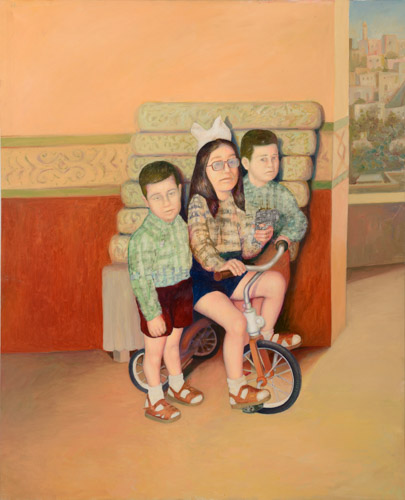
Asad Azi
Me Ibrahim and Fares, 2006
Oil on canvas, 130X104 cm
Buthina Milhem
Buthina Milhem
Year of Birth: 1961
Place of Birth: Ar'ara
Place of Residence: Ar'ara
Buthina Abu Milhem lives and creates in the village of Ar’ara, where she was born in 1961. Up until the 1990s, she was a kindergarten teacher and participated in painting courses for the women of the village and the surrounding areas under the guidance of Farid Abu Shakra. In 1996 she enrolled in Art Studies at the Ar’ara Art Center that opened at the initiative of Abu Shakra and Na’amat, and where she continued to work as a certified senior art instructor until 2000. Concurrently during these years she worked as the preschool art coordinator in the Altfel Al-Arabi Association, which trains kindergarten and preschool teachers (1).
At the start of her artistic journey, Abu Milhem painted and sculpted using various materials, including plaster. However, from the end of the 1990s she began to use old Palestinian dresses as the main material in her works. She strips the dresses of their traditional role, takes them apart and uses them to create new compositions. In 1999 she used her grandmother’s Palestinian dress as a means of reviving her memory and the heritage of her embroidery. She cut the dress in the aim of embedding its pieces in her artworks, and used the cut pieces to sew both large and small clothes to represent both present and absent people. The garment that is enclosed within wood and glass frames becomes an unwearable object, a caged-in image pierced with pins and needles. In 2005 she exhibited the series “The Needle Vanquishes the Tailor” (Umm el-Fahem Art Gallery, curated by Farid Abu Shakra) in which her grandmother’s traditional dresses became new objects representing the body, memory, identity and land.
Abu Milhem uses Palestinian textile and embroidery as a main medium and a cultural code. She incorporates in the traditional dresses threads, needles, pins, wax, and often also coffee and tea stains. She sees in the pins, threads, brushes and colors she uses substitutes for the gentle needle in her grandmother’s hand. She also employs the assemblage technique, which includes sewing, writing and creating rich textures. She writes in pencil on the fabrics, sometimes in abstract style and sometimes in Arab letters that repeat themselves. In the words of Abu Milhem:
“I am the needles, and their pricking is painful, the pins and threads are my brush and paints, substitutes for the light needle in my grandmother’s hands, as opposed to her, I don’t know how to embroider the traditional patterns. For me the pins and needles are sharp tools that cause pain, that symbolize the hardships of life, although in some of my works I use white or ivory color pins, which embody some sort of light and hope” (2).
The influences on Buthina Abu Milhem’s art include Palestinian embroidery tradition, which she uses not only as a cultural reference but also as a tool to deconstruct and reconstruct identity. She draws inspiration from her personal biography, particularly from the dresses passed down to her by her grandmother, which she incorporates in the collective memory of displacement and Palestinian identity. Her style was also influenced by the conceptual genre in textile art, for example the works of Anni Albers, a textile artist whose art included hand-weaving, as both Abu Milhem and Albers combine traditional craftsmanship with material and experimental exploration (3).
The subjects of Buthina Abu Milhem’s art include female identity, personal and collective memory, Palestinian heritage, pain, loss and yearning for a place. Her works examine the role of women in society and the inter-generational connection between women through everyday objects such as dresses. Her artwork also contends with the sense of displacement and belonging, by navigating between an intimate experience and a political statement. She unstitches and re-stitches, cuts the dresses but gives them new life, examines the body through presence and absence. She wounds and pierces the fabric with needles but also embroiders, expresses the pain of loss, migration and diaspora, but also searches for mending and repair. For her, the dresses, embroidery and proverbs in Arabic serve as a bridge between past and present.
The curator Farid Abu Shakra wrote about her works: “The presence of the word in the works of Buthina Abu Milhem raises many questions, she arouses our feelings and ideas as she speaks to us in the language of our forefathers. And then she takes the feelings and ideas and places them in the reality space, and in doing so connects the word with a proverb from popular heritage and culture. Her attempt to interact with the language, with the word and with the heritage, is the product of verbalization that carries human, social and political meanings … Abu Milhem brings torn pieces of fabric on which are embroidered familiar Palestinian motifs, on which she poured tea or coffee powder until it created an effect of poverty, with the pins and needles in the fabric conveying the sense of a catastrophe. Abu Milhem tries to consolidate her ideas into a single unified whole, and to realize them in one model, the foundational model of existence, of heritage and of identity” (4).
- “Buthina Abu Milhem” – Wikipedia
- Buthina Abu Milhem, “A Lamentation of Threads and Pins”, Umm el-Fahem Art Gallery, El-Sabar Association, 2018.
- Farid Abu Shakra, Correspondence: Contemporary Arab Artists (exhibition catalog), The Museum for Islamic Art, Jerusalem, 2008.
- Ibid.
Sources
Artist Website – https://buthinamilhem.wordpress.com
Exhibitions – מתוך מאגר מרכז המידע של מוזיאון ישראל, ירושלים
Catalogs –
The Needle Vanquishes the Tailor, solo exhibition, curator: Farid Abu Shakra, Umm el-Fahem Art Gallery, El-Sabar Association, 2005
רקמות: רקמה וקליגרפיה באמנות העכשווית בישראל, תערוכה קבוצתית, אוצר: חיים מאור, אוניברסיטת בן גוריון בנגב, המחלקה לאמנויות, 2007
התכתבות: אמנים ערבים בני זמננו, אוצר: פריד אבו שקרה, המוזיאון לאמנות האסלאם, ירושלים, 2008
מלבושים, תערוכה זוגית (עם רות דורית יעקבי), אוצר: חיים מאור, גלריה אוניברסיטת בן גוריון, 2015
קינת החוטים והסיכות, תערוכת יחיד, אוצר: חיים מאור, הגלריה לאמנות אום אל-פחם,עמותת אלסבאר, 2018
מחט עירומה, תערוכת יחיד, אוצרת: מאירה פרי-להמן, גלריה עירונית כפר סבא, 2020
קול ישמעאל : ייצוגים של זהות מורכבת בעבודותיהם של אמנים ערבים בישראל, תערוכה קבוצתית, אוצר: חיים מאור, הגלריה העירונית לאמנות רחובות, 2002
אלפאח'ור, תערוכה קבוצתית, אוצר: סעיד אבו שקרה, הגלריה לאמנות אום אל-פחם, 2003
Feature Stories and Articles –
"בותינה אבו מלחם", ויקיפדיה
"משמלתה של סבתא לשמלת הילדות – תערוכה חדשה בגלריה העירונית כפר סבא", חדשות כפר סבא, 30.11.2020
A review of the solo exhibition “Naked Needle”, curated by Meira Perry-Lehmann, at the Kfar Saba Municipal Gallery
ضحى عبد الرؤوف, "التجدد الفني الرمزي ونغماته التاريخية في اعمال الفنانة بثينة ملحم", ثقافات, 2020
An article that discusses the symbolism of the Palestinian shirt in the artist’s works and in the material heritage, in historical and cultural contexts
بشرى بن فاطمة, "بثينة ملحم وحكايات لا تنتهي مرثية الخيوط والدبابيس", ثقافات, 11.7.18
The article presents the works of Abu Milhem as a space of open, continuous stories, in which threads, pins and gentle material elements become a visual lamentation of sorts
بشرى بن فاطمة, "الثوب هوية بصرية تسرد تداخلات المكان", المدائن بوست, 29.10.25
The article describes the garment in Abu Milhem’s work as a space of visual identity, story and place. The act of sewing as a visual mapping of belonging, land and wanderings. Artwork as an act of resistance that preserves identity and the historical story by material means
الكاتِبة بشرى بن فاطمة, "أعمال التشكيلية الفلسطينية بثينة ملحم مداعبة جمالية تطوّع الرمز ليتحرّش بالواقع", 9.5.13
An analysis of Abu Milhem’s works as an aesthetic game charged with meaning, in which the symbol penetrates reality and disrupts it
بشرى بن فاطمة, "اعمال الفنانة التشكيلية الفلسطينية بثينة ملحم, مداعبة جمالية", 27.1.17
Analysis of the material and technique dimension in Abu Milhem’s works as an experiential and emotional dimension, which enables the viewer to identify with the artist’s position
"الفنانة بثينة ملحم من عرعرة تفتح معرضها في المانيا, معرض تشكيلي مشترك بين فنانتين بنينا كرشبام وأبو ملحم في المانيا," بقجة, بقجة, 11/08/12
A news item about a joint exhibition of the artists Buthina Abu Milhem and Bnina Kirschbaum in Cologne, Germany
https://www.artcenter.org.il/cgi-webaxy/item?886
A review of the exhibition “أنا هي – I Am Her, at the Givat Haviva Peace Gallery, curated by Anat Lidror, with the participation of the artists Buthina Abu Milhem, Sohad Deeb, Doaa Badran and Rahmi Hamzi
Interviews –
نسرين عوّاد, "حوار مع الفنانة البصرية بثينة ملحم", International art colony, 16.8.18
Nasreen Ouad interviews Abu Milhem about her life and art
"أساليب جديدة في الفن التشكيلي, ٤ يونيو", قناة الحرة يوتيوب, 4.6.12
An interview with the artist for the Alhurra channel
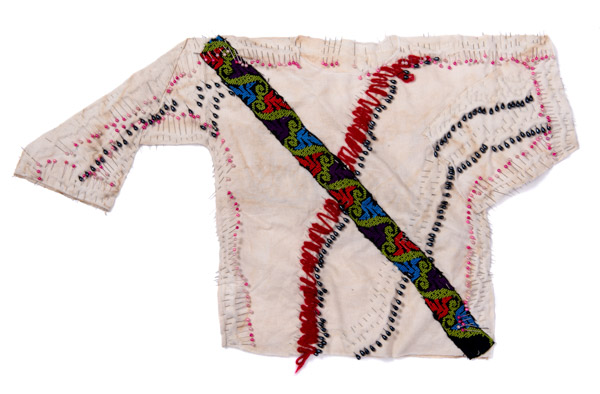
Buthina Abu Milhem
The needle vanquished the tailor, 2007
Textile, pins, thread and needles, 59X79 cm
Khaled Hourani
Khaled Hourani
Year of Birth: 1965
Place of Birth: Hebron
Place of Residence: Ramallah
Khaled Hourani is an artist, curator and writer, and considered one of the influential and prominent artists in the development of contemporary Palestinian art. His artistic work is characterized by the ability to connect between the local Palestinian experience and global artistic contexts, while exploring questions of identity, memory and resistance. Hourani uses a visual language based on symbolism and conciseness, and turns everyday elements into cultural and political signals open to interpretation (1).
Hourani earned a BA in History from Hebron University (1987), a field of study that influenced his artistic outlook and his approach to creative practice. His academic training contributed to deepening his artistic involvement in Palestinian history and collective memory, reflected in his works that view art as a tool that fosters study and thought, and not as an aesthetic experience detached from social and political contexts (2).
Alongside his personal artistic work, Hourani has played a central role in the establishment and development of Palestinian culture and art institutions. He served as the General Director of the Fine Arts Department in the Palestinian Ministry of Culture in the years 2004-2006; As the Artistic Director of the International Academy of Art in Ramallah between 2007-2010; and as its General Director from 2010 to 2013. In these positions he contributed to the development of art education, to building institutional infrastructures that support contemporary art in the Palestinian Authority, and to bolstering the presence of Palestinian art in the international arena (3).
In addition to his visual undertaking, Hourani is a writer and cultural activist. He publishes books and articles about the connection between art, politics and everyday life in the Palestinian context. In his writing he views the act of writing as a direct continuation of his artistic work, as a parallel space for thought and analysis. His writing brings together personal experience and theoretical observation regarding the role of art in a complex political and social reality (4).
Hourani’s contribution transcends his personal artwork, and he is considered one of the main activists in contemporary Palestinian culture. Through his institutional work, teaching, writing and artistic initiatives he has contributed to creating a critical environment that supports contemporary art, as well as to a reexamination of Palestinian symbols and narratives as living and renewed cultural practices (5).
Hourani’s artistic practice is multidisciplinary and conceptual. He paints with oil and acrylic, photographs, sculpts, builds installations, and is involved in collaborative projects. His works explore issues relating to occupation, boundaries, movement and collective memory, symbols, visual simplicity and often also humor. His works do not rely on a direct or didactic message, but rather open a space for the viewer’s involvement and participation in generating the meaning (6).
Hourani’s artistic style is characterized by the use of a wide range of mediums – painting, photography, sculpture and installations – yet consistently preserves a visual language in which minimalistic compositions carry significant layers of political and cultural content. His work “responds to the uniqueness that infiltrates daily life in Occupied Palestine”, and revives traditions such as embroidery within a modern and critical context (7).
One of the central motifs in Hourani's works is the separation wall, which he depicts not only as a physical barrier but also as a metaphor of occupation and division. In an exhibition (Leaping Over the Barrier, 2022), at the Zawyeh Gallery in Ramallah, he showcased both realistic and fantasy style paintings, in which young men climb on the separation wall using ropes and ladders, or hop over it. These scenes hint to an act of resistance and to an attempt to rise above the barrier.
Hourani also uses colors symbolically, as an essential part of his artistic language. Thus, for example, his recurring use of the image of the watermelon and its colors, which alludes to the Palestinian flag and to the political restrictions imposed on its use. In addition, he also employs artistic means such as metaphors and ironic rhetoric. In his works, such as Picasso in Palestine (2019), he combines high art and sharp political criticism, and emphasizes how the movement of objects of high cultural value is interwoven into and embedded in bureaucratic and power systems.
- Khaled Hourani, Barjeel Art Foundation
- Khaled Hourani, Dalloul Art Foundation
- Khaled Hourani, This Week in Palestine, October 2022
- Hourani, Khaled. “Draw Me a Duck.” Third Text 20, no. 3–4 (2006), pp. 445-448
- الشايب، يوسف. "خالد الحوراني: رحلة فنيّة تتواصل ألقاً، المنصة، 2023
- Vujanić, Lela. “Khaled Hourani: From Blue Figure to Picasso in Palestine.” Nafas Art Magazine, June 2018
- Khaled Hourani, Dalloul Art Foundation
Sources
Exhibitions – מתוך ויקיפדיה
Catalogs – ערבית ועברית. חמישה סיפורים: תייסיר ברכאת, נביל ענאני, סולימאן מנסור, חאלד חוראני, סמיר סלאמה, אוצרים: חנא פרח וחאלד חוראני, הגלריה לאמנות אום אל-פחם, 2006
Feature Stories and Articles –
“Khaled Hourani”
Biography and artworks
https://dafbeirut.org/artists/khaled-hourani
Artworks+biography+CV+videos+exhibitions
Chrisoula Lionis, Khaled Hourani, “The Watermelon Flag: Solidarit Subversion, and Sumud”, Beyond Molotovs – A Visual Handbook of Anti-Authoritarian Strategies, 2024, pp. 148-151
The article examines the role of art and symbols in Palestinian resistance, with an emphasis on the watermelon which became a powerful symbol of solidarity, and art that challenges in the face of Israeli censorship. Khaled Hourani examines the history of the Palestinian artists who used symbolic forms, such as the watermelon, to resist oppressive narratives and to express steadfastness over time
"من بيكاسو إلى جمع تكسير | معرض", عرب 48, 2021
An interview with Khaled Hourani about his exhibition ”Dispersed Crowds” at the Zawyeh Gallery in Ramallah in 2019. The exhibition focuses on the description of crowds in public demonstrations and protests, and shows how the individual dissolves in the group while temporarily losing their feeling of loneliness but also searching for impact and meaning. Hourani paints the psychological and social experiences of many, emphasizing the recurring images of groups, movements of the body, clapping, slogans and active participation in the public space. Through his paintings, the exhibition raises questions about identity, existence and the boundary between the ‘self’ and the collective, and expresses Hourani’s personal experiences and his direct participation in social and political processes in the public space
https://almanassa.ps/page-4298.html
An interview that examines the artist’s artistic journey, who views art as a tool for learning, dialogue and creating a parallel reality in the face of the political and social reality. The interview underscores the main stations in his career, for example the “Picasso in Palestine” project and the painting “The Watermelon”, which demonstrates a creative way of circumventing the prohibition to display the Palestinian flag. Hourani expresses his deep appreciation for the young generation of Palestinian artists and views them as change agents. Out of his personal and political experiences – including time in jail – he presents art as a tool of resistance, creativity, and hope under occupation
"فاصل متواصل، وسنعود | معرض رقميّ", عرب 48, 2022
Leaping Over the Barrier by Khaled Hourani." Zawyeh Gallery, 2022
Two sources that examine the exhibition “Leaping Over the Barrier”, at the Zawyeh Gallery in Dubai in 2022. The exhibition focuses on the separation wall which Israel built. Hourani paints the wall again and again as a symbol of occupation and division. He points to it as a barrier and as a disruption of everyday life. Through his works he strives to highlight the wall, but also to, symbolically, remove it. He does this by minimizing the surrounding landscape or by painting people climbing on it with ropes, ladders or in their imagination. He also uses real life media photos of young people climbing over the wall, and emphasizes that this depicts an actual reality and not staged scenes. Thus he creates works that combine political criticism, social commentary and a symbolic visual language
"خالد حوراني يطلق روايته "البحث عن جمل المحامل"", شبكة نوى، فلسطينيات, 2019
The launch of Khaled Hourani’s novel “Searching for Jamal al-Mahamel”, at the A.M. Qattan Foundation in Ramallah
Khaled Hourani, Barjeel Art Foundation
This text underscores Khaled Hourani’s significant role as an artist, writer, commentator and curator in the context of the socially and politically constrained Palestinian environment
Khaled Hourani”, This Week in Palestine, 2022
This text offers a comprehensive overview of Khaled Hourani’s career, his artistic contribution, and involvement in criticism on social and political issues in Palestine
Palestinian artist Khaled Hourani revisits the occupation wall in Dubai exhibition, The Arab Weekly, 2022
A description of Khaled Hourani’s work about the separation wall in the exhibition “Leaping Over the Barrier” at the Zawyeh Gallery in Dubai, which uses strong images of figures – particularly young people – climbing, jumping or crossing the walls in their imagination, as a symbol of freedom from the occupation
Hourani, Khaled. "Draw Me a Duck", Third Text 20, no. 3-4 (2006): 445–48
In the article “Draw Me a Duck”, Khaled Hourani examines the intersection between art, resistance and the Palestinian experience of jail. He shows how Palestinians detainees use different art forms – such as painting, handicraft and symbolic objects – as a means of expressing their identity, steadfastness and political feelings, despite the restrictions imposed by the occupation and jail policy
Al-Hourani, Khaled. "The Idea of Assaaf's Statues Expresses the Palestinians' Need to Invent a Symbol", Layali Amman, 2017
The article examines the idea of creating statues as an expression of the needs of the Palestinian people for an invented national symbol. It focuses on Khaled Hourani’s artistic projects, especially the creation of miniature statutes representing Palestinian history, culture and resistance
Sandy Tolan, “Picasso comes to Palestine”, Al Jazeera, 16.07.2011
The article describes the project of bringing Pablo Picasso’s painting “Buste de Femme, 1943 to Palestine, and its display at the International Academy of Art Palestine in Ramallah. He emphasizes the symbolic and political significance of transporting a masterpiece from Europe to an occupied territory, and shows how the mere presence of art functions as an act of cultural resistance, an expression of sovereignty and a semblance of normalcy in the face of the complex geopolitical reality in which the Palestinians live
Alexandra Chaves, "How the Watermelon Became a Symbol of Palestinian Resistance", The National, 30.5.21
The article examines how the watermelon became a symbol of Palestinian resistance and identity. It explores the historical context of the censorship and restriction of Palestinian symbols, such as the prohibition to fly the Palestinian flag, and how the colors of the watermelon – red, black, white and green – served as a means of cultural expression and of resistance
Interviews –
Lela Vujanić, "An Interview with Khaled Hourani: First Intifada Was an Artistic Project", Adbusters
An interview with Khaled Hourani, that delves into his stance that the first Intifada was not only a political revolt, but also an artistic movement that expressed identity and consciousness
Lela Vujanić, “Khaled Hourani: From Blue Figure to Picasso in Palestine”, Nafas rt Magazine, June 2018A
An interview that examines Khaled Hourani’s artwork from 2009 to 2017, while emphasizing his contribution to contemporary Palestinian art
يعقوب، أوس. "خالد حوراني: أرسم لأقول ما لم أستطع بعد قوله", رمان الثقافية
An interview with Khaled Hourani about his artistic journey, about the influences on his art and his experiences as a visual artist, commentator and influential personality in the Palestinian artist community
“Khaled Hourani: A Retrospective”
In this video Khaled Hourani describes his first retrospective exhibition at Glasgow’s CCA, featuring installation and conceptual works from the 2000’s. He discusses the inspiration behind each work and shares insights about his creative process
Artist Talk: Khaled Hourani, 2017
A video-recorded talk with Khaled Hourani, describing the odyssey of bringing Picasso’s painting to Palestine and going through Israeli checkpoints. The video emphasizes the significance of this act in the context of Palestinian identity and culture
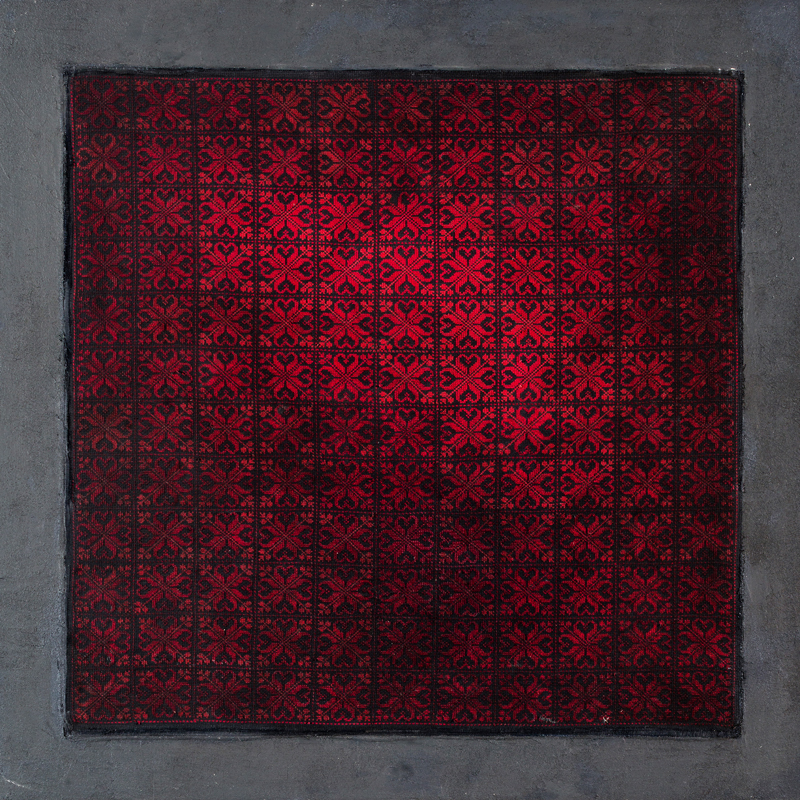
Khaled hourani
In the Folds of the Dress, 2006
Silk embroidery, sand, and acrylic on wood, 100 × 100
Mai Daas
Mai Daas
Year of Birth: 1991
Place of Birth: Tira in the triangle
Place of Residence: Tira in the triangle
Mai Daas is a multidisciplinary artist whose artwork explores issues of identity and culture. She holds a BA in Art from Beit Berl College (2015) (1). Her works have been featured in solo and group exhibitions in Israel and abroad, and are included in public and private collections, among them the Knesset Art Collection. She has won numerous awards, including the Israeli Ministry of Culture and Sport Young Artist Award (2022), and was the recipient of an Honorable Mention from the Becky Dekel Award for the Outstanding Woman Artist in Israel by the Association for Women’s Art and Gender Research (2025).
Mai Daas is married and the mother of a son. When asked to define herself she answered: “Who am I? First of all, a woman. In Tira, Israel [..], This is a complex and deep definition. Woman, mother, daughter, spouse, Palestinian Arab. Muslim. Artist” (2). She recounts that when she chose the art world she encountered opposition from her close surroundings. Her first solo exhibition was at the Umm el-Fahem Art Gallery (“On the Seam”, 2021), after numerous rejections of art galleries. She notes that the challenge facing young Arab women is more complex. They must forge their individual identity alongside their national, cultural and gender belonging, in a society contending with tensions between tradition and conservatism on the one hand and progress and openness on the other (3).
Daas’s works explore personal and female identity and the tension embodied between them. This takes place alongside continuous political-social references: that she is a Palestinian Muslim Arab woman in a Jewish State. In her paintings she seeks to encourage the female viewers to inquire into their identity from their point of view (4). She views the creative process as a healing journey, while contending with personal and universal traumas (5). Thus, for example, in the exhibition "Revelation” (Braverman Gallery, 2025), she creates scenes in which women kneel in circles, sit, lie down or close their eyes as they face each other. The image of female closeness, of gentle and quiet movement, turns the domestic space into a space of rituals, and painting into a tool for observation, birth, emergence and revelation (6).
In her works Mai Daas uses motifs of exposure and concealment, erasure and whitening, which express defiance, resistance, defensive action, and contending with the social conventions in the personal and public space in which she lives (7). The space of her paintings is usually built as a closed stage – walls, closed doors, an inner world that does not open outwards. Her figures are always accompanied by charged and symbolic materials, such as rugs, fabrics, and flour, which empower the female world (8). The paintings resemble documentation of a performance, a dance, or another type of performative, theatrical or ritual activity – all taking place in domestic spaces (9).
Daas’s feminism, directed at the patriarchal oppression in the society in which she lives – through all the ritualistic and theatrical indoor scenes – does not in its essence reject, defy or clash, but instead focuses in its entirety on the positive power of women as a community. They are not angry, nor do they raise their fists – they use the domestic spaces to which society designates them to carry out these rituals, seemingly in secret and seemingly for themselves. Daas challenges the patriarchy more by fully asserting what they have and less by pointing out what the women under its rule lack (10).
Her realistic-symbolic works express the complex and aggressive web of relationships between Jewish Israeli and Palestinian society, and within Palestinian society itself. Daas depicts a self and collective portrait that does not succumb to frameworks, clichés and restrictions, and courageously touches on subjects considered taboo. Her works draw attention to the socially silenced and repressed, both Palestinian and Israeli, and offer an alternative space of existence and the possibility of a non-violent confrontation, while examining ways of reconciliation and dialogue, sharing and a discussion of subjects in disagreement (11).
- Mai Daas, Braverman Gallery
- “What’s Happening // Mai Das”, Portfolio, 25.6.21
- Mai Matityahu and Dana Marsh, “Women in General, and Arab Women in Particular, Can Do Everything”, Sapir Academic College
- “What’s Happening // Mai Daas, Portfolio
- Mai Matityahu and Dana Marsh, “Women in General, and Arab Women in Particular, Can Do Anything”
- Mai Daas, Braverman Gallery
- “Present: Mai Daas”, Artists House Tel Aviv, June 2024
- Ofir Hovav, “Mai Daas Paints Women Without Fear of a Boulder or a Fence”, Haaretz 19.6.23”
- Avi Pitchon, “Mai Daas’s Ritual Paintings Evoke Knowledge Passed On From One Generation to Another Among Women”, Haaretz, 31.7.25
- Avi Pitchon, Ibid.
- “Present: Mai Daas”
Sources
Exhibitions – מתוך אתר גלריה רוזנפלד
Articles –
אבי פיטשון, "הציורים הטקסיים של מאי דעאס מזכירים ידע שעובר מדור לדור בין נשים", הארץ, 31.7.25
An opinion article about Mai Daas’s exhibition “Revelation” at the Rosenfeld Gallery in July 2025. Avi Pitchon explores the performative, theatrical and ritualistic dimension of the painted space, that takes place within the domestic space
אופיר חובב, "מאי דעאס מציירת נשים בלי לפחד מסלע או גדר", הארץ, 19.6.23
An interview with Mai Daas following her participation in the group exhibition “Second Station”, curated by Adina Pearlman-Vardi and displayed at the Tira Community Center. The artist emphasizes female power she maintains is found in every woman and which she seeks to express in her works
"נוכחת: מאי דעאס", אוצרת שלי ליבוביץ קלאורה, בית האמנים תל אביב, יוני 2024
Text of the curator Shelly Liebowitz Kalaora about Mai Daas’s sixth exhibition, “Present”
نرمين عبد موعد, "الطالبة مي دعاس: " الفن لغة الملائكة لو نطقها البشر لعم السلام"", موقع بكرا, 15.6.14
An interview with Mai Daas when she was a student at Beit Berl College. Daas discusses her connection to art, which she calls “the language of angels” – an internal and mental language, and also about her Art Therapy studies in which she specialized
"الفنانة مي دعاس تطرح قضيّة المرأة من خلال معرضها "أنثى بالرمادي"", موقع بكرا, 10.11.16
An interview with Mai Daas following the exhibition “Woman in Grey” at the Rosenfeld Gallery in Tel Aviv. The text is an extensive review of the exhibition
מאי מתתיהו ודנה מרש, "נשים בכלל, וערביות בפרט, יכולות לעשות הכל", ספירלה, המכללה האקדמית ספיר
In an interview to the student magazine of the Journalism Track in the Communications Department at Sapir Academic College, Mai Daas discusses her art; How she deals with her being an artists in Palestinian society; and her hopes for the future
"בתווך: מאי דעאס", המכללה האקדמית ספיר, אוקטובר 2021
A review of the exhibition “In Between”, curated by Carmit Blumensohn at the School of Art, Society and Culture at Sapir Academic College
Interviews –
"מה קורה // מאי דעאס", פורטפוליו, 25.6.21
Mai Daas answers the questionnaire in the “What’s Happening” section following the exhibition “In Between” at the Umm el-Fahem Art Gallery
يوتيوب, صباحنا غير, قناة مساواة, مي دعاس, مسيرتها في الفن التشكيلي
An interview with Mai Daas, in which she discusses her journey in the plastic and visual art world. In the conversation she recounts the start of her artistic path, the influences that contributed to shaping her style, and the main subjects affecting her works – such as the representation of women, as well as identity, place, and cultural memory. She also explains her creative process, its challenges, and the social relationships she seeks to express through her works
The chapter also presents parts of an exhibition of some of her works, and enables the viewers to understand the way she deals with visual images and symbols, and the political and social message that her works convey
"مي دعاس – مسيرتها في الفن التشكيلي", #صباحنا غير, قناة مساواة الفضائية, 18.2.16
An interview with Mai Daas about the beginning of her journey in the art world, her childhood, the influences she detects in her art, and the unique characteristics in her work
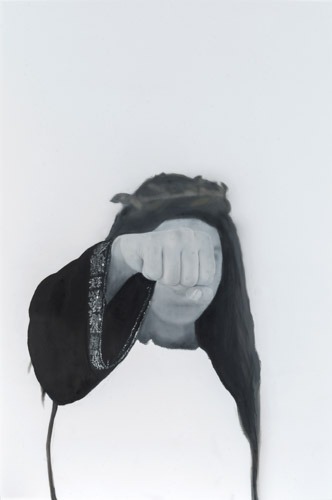
Mai Daas
Untitled, 2021
Oil on canvas, 151×101 cm
Sliman Mansour
Sliman Mansour
Year of Birth: 1947
Place of Birth: Bir Zeit
Place of Residence: Jerusalem
Sliman Mansour is considered one of the most central and influential artists of Palestinian art. He lives in east Jerusalem and creates in Ramallah. As someone who was born in 1947, his early childhood experiences of displacement and political upheavals shaped his world outlook and artistic vision. In the years 1967-1970 he studied art at the Bezalel Academy of Arts and Design in Jerusalem and then returned to the West Bank to develop a unique Palestinian visual language.
Sliman Mansour was born in the town of Bir Zeit, north of Ramallah. He is the fourth son in a family of six children. His father died when he was four years old, an early experience of loss that impacted his life going forward. He then moved to Bethlehem, where he was educated in an Evangelical Lutheran school. His profound interest in art was conspicuous. He studied under the guidance of the art teacher Felix Theis, a German artist who played a significant role in his acquaintance with the history of European art and its different styles. This was pivotal in shaping Mansour’s visual awareness at an early age. The national, social and geographic changes following the 1948 Nakba also impacted Mansour and became a central part of his art (1).
Sliman Mansour enrolled in the Bezalel Academy of Arts and Design in Jerusalem in 1967, where he studied painting and sculpture in the Art Department under Yossi Stern and Joseph Hirsch. Few Palestinians studied at Bezalel during this sensitive time, immediately after the conquering of Jerusalem and the West Bank. The war also reinforced his outlook of art as a non-neutral act, directly related to the political reality and to the dominant conditions of power and control (2) (3).
Sliman Mansour completed his studies in 1970, and in 1973 co-founded the League of Palestinian Artists and played a central role in organizing the League‘s activities in the occupied Palestinian territories. He served twice as the head of the League (1979-1982 and 1986-1990), which functioned not only as a formal framework but also as a vital cultural institution for organizing exhibitions, supporting artists, and for group work under political restrictions and censorship (4).
During the 1970’s Sliman Mansour was prominent as one of the influential Palestinian artists in the occupied territories. His early works were characterized by the use of symbols and a visual language that is realistic, direct, clear and understood by the general public. His work “Camel of Hardship” (1973), which depicts a hunched Palestinian carrying the city of Jerusalem on his back as a physical burden, is considered one his most influential works of his artistic career. The image transcended the artistic realm and became a collective symbol of Palestinian existence and the historical responsibility it bears. It was printed as a poster and hung in private homes, schools and refugee camps. The dissemination of the image was an expression of Sliman Mansour’s position regarding art, as a medium that must be accessible and used as a social medium, and not remaining within the limits of select exhibition spaces (5) (6).
During the 1970’s and 1980’s, Sliman Mansour developed a visual language based on elements of Palestinian rural life, such as olive trees, oranges and women wearing the traditional embroidered garment. Alongside these, he used architectural elements identified with Jerusalem, particularly with the Dome of the Rock. These motifs did not aim to express romantic nostalgia, but rather to reinforce the stance of Palestinian cultural continuity in the face of attempts of displacement and erasure. His works focused on the ordinary Palestinian – the peasant, worker, woman – portraying them not as heroes or as symbols, but as those destined to carry the memory of history and the commitment to steadfast perseverance (Sumud). In addition, Sliman Mansour also used his works as a means of opposing violence and of circumventing the means of photographed documentation, as its use by Palestinians was prohibited. Thus, for example, in his work “Bride of the Homeland” (1976), in which he painted Lina Nabulsi, a Palestinian teenage girl killed by the Israeli army during a demonstration in Nablus (7) (8).
Sliman Mansour’s artwork underwent a significant change during the first Palestinian Intifada. He founded the “New Vision” Group with the artists Nabil Anani, Vera Tamari, and Tayseer Barakat. The group refused to use art supplies imported through Israel, and preferred working with local materials such as clay, henna, coffee and straw. This change was not only an experience in form and material, but conveyed a conscious stance. The use of clay, with its cracks and brittleness, turned the material itself into a theme symbolizing dismantling, siege and continuous pressure. At this stage Mansour began to create more abstract works, without forgoing the clarity and the calls characterizing his artwork. The creative act itself became part of his artistic discourse (9) (10).
In addition to his artwork, Mansour played a central role in building the infrastructure of Palestinian art. In 1994 he founded the Al-Wasiti Art Center in Jerusalem, and served as its director in the years 1995-1996. The Center became a key platform for the exhibition and teaching of Palestinian art. He also taught at Al Quds University; was a partner in establishing the Palestinian Association for Contemporary Art in 2004; and was among the founders of the International Academy of Art Palestine in Ramallah in 2006 (11) (12).
In his later works, Sliman Mansour turned to examine the current political reality in a more direct manner, by incorporating distinct elements such as the separation wall, military checkpoints and breaking the geographic space into separate segments. These elements do not only serve as a distant background, but rather appear as structures that are present, and penetrate the body and the landscape. Despite these changes, Sliman Mansour’s artwork remained loyal to the theme of the land, as a habitat as well as a controversial concept. His paintings do not aspire to offer solutions, but to document the continued connection of the Palestinian people to their land, the pressure, and the time that continues on (13).
Sliman Mansour has exhibited his artwork in Palestine, the Arab world, Europe and the United States, and has participated in international exhibitions and biennials. His works are found in significant public and private collections. He has won numerous awards, among them the Palestine Prize for Visual Art in 1998, the Grand Nile Prize, and the UNESCO-Sharjah Prize for Arab Culture (2019). These prizes reflect a recognition of his longstanding contribution to shaping a contemporary Palestinian artistic language. His artistic biography is a testament and an example of an artist whose art relates to historical and political contexts, and contributes to the standing of art as a tool of memory, responsibility and continuity.
- Sliman Anis Mansour. Daf Beirut
- Biography, Sliman Mansour Official Website
- Sliman Mansour. Zawyeh
- Sliman Anis Mansour, Daf Beirut
- Meka Boyle, “sliman mansour preserves Palestinian history through art “, hyperallergic, 6.12.23
- Painting Palestine’s Story”, Embrace the Middle East
- خالد فرّاج, "عن سليمان منصور ومساهماته في صوغ الرموز الفلسطينية", معهد الدراسات الفلسطينية, 9.8.23
- الشايب يوسف، "سليمان منصور حكايات من السيرة والمسيرة"، منصة فلسطين الثقافية،, 2024
- سليمان منصور"، مركز رؤية للتنمية السياسية ، 2023
- Sliman Mansour. Zawyeh
- Sliman Anis Mansour, Daf Beirut
- Biography, Sliman Mansour Official Website
- Meka Boyle, "sliman mansour preserves Palestinian history through art", hyperallergic ,2023
Sources
Artist Website – https://slimanmansour.com/about-the-artist-sliman-mansour/
Exhibitions – מתוך המאגר של מרכז המידע של מוזיאון ישראל, ירושלים
Articles –
"سليمان منصور", Palestinian Return Centre (PRC)
The text presents Sliman Mansour as one of the central and influential artists in Palestinian art. His artwork focuses on preserving Palestinian memory, identity and heritage, and serves as a tool of political, cultural and historical expression in the face of the reality of occupation, displacement and loss. The text emphasizes his contribution to art as a form of cultural resistance, his involvement in collective artistic initiatives and his international influence
Sliman Mansour: Painting Palestine’s Story”, Embrace the Middle East
An article presenting the artist’s importance, whose works are a symbol of national identity and a source of inspiration in contemporary Palestinian art. Through his artwork, Sliman Mansour documented life under continued military occupation and began to use natural materials in his works, following his call to boycott Israeli art supplies, which became a trademark of his art
خالد فرّاج, "عن سليمان منصور ومساهماته في صوغ الرموز الفلسطينية", مؤسسة الدراسات الفلسطينية, 8.9.23
The article focuses on symbols and images in Sliman Mansour’s art, motifs which have become cultural and political icons in Palestinian memory
Meka Boyle, “Sliman Mansour Preserves Palestinian History Through Art”, Hyperallergic, 6.12.23
An interview with Sliman Mansour, which presents his role not only as an artist but also as an intellectual who has documented his people and their struggle for liberation for over fifty years. In the interview, Mansour tells about his life, the changing styles in his artwork, the transition from political realism to documenting Palestinian culture, and his role in founding the League of Palestinian Artists
"سليمان منصور", Vision for Political Development (Vision-PD), 14.7.23
A description of Sliman Mansour’s life, art, and contribution to Palestinian art. The article describes Mansour as someone who is not only an artist but also a founder and partner of the field of art education, who teaches at Al-Quds University, at UNRWA, and additional places. He was one of the co-founders of the Palestinian Artists Association in the 1970’s, founded and was the Director of the Al-Wasiti Art Center in Jerusalem, participated in establishing the Palestinian Folklore Museum, and headed the Academy of Contemporary Palestinian Art in Ramallah
Sliman Mansour, Zawyeh Gallery
A detailed entry about the life and work of Sliman Mansour
يوسف الشايب, "سليمان منصور .. حكايات من السيرة والمسيرة", المنصة منصة فلسطين الثقافية, 24.9.24
The text presents Sliman Mansour’s artwork as works that combine a personal life story with a collective national story, using images of people, land, work, suffering and steadfastness (Sumud). Over the years the artist’s work became a visual language identified with the Palestinian experience, aimed at both the local public as well the international arena
Interviews –
Meka Boyle, “Sliman Mansour Preserves Palestinian History Through Art”, Hyperallergic, 6.12.23
A filmed interview conducted with Sliman Mansour in Ramallah, in which he talks about the connections between his art, Palestinian identity and the revolution, and about the way in which art reflects historical, social and political processes of the Palestinian people
Sliman Mansour: The art of the Palestinian resistance, Talk to Al Jazeera, 26.6.21
A conversation with Sliman Mansour, who talks about the role of art as a tool of resistance and representation of the Palestinian story. He describes how over about 50 years of art work he uses painting as a means of documenting the life of the Palestinians under occupation, of preserving cultural memory and of expressing the sense of perseverance and steadfastness of the Palestinian people. He emphasizes that his art is not only a personal expression, but an inseparable part of the national and cultural struggle, and that his artwork reflects the difficult reality alongside the spirit of hope and resistance
5.8.21,خلال حياتي | Sliman Mansour | TEDxAlQudsUniversity
A TEDx filmed talk of Sliman Mansour at Al-Quds University, in which he tells about his life and artwork over the years. He describes the way he chose to use his art to document the experiences of the Palestinian people, and talks about the dialogue his art conducts with history and with Palestinian reality in its struggle over its identity and rights
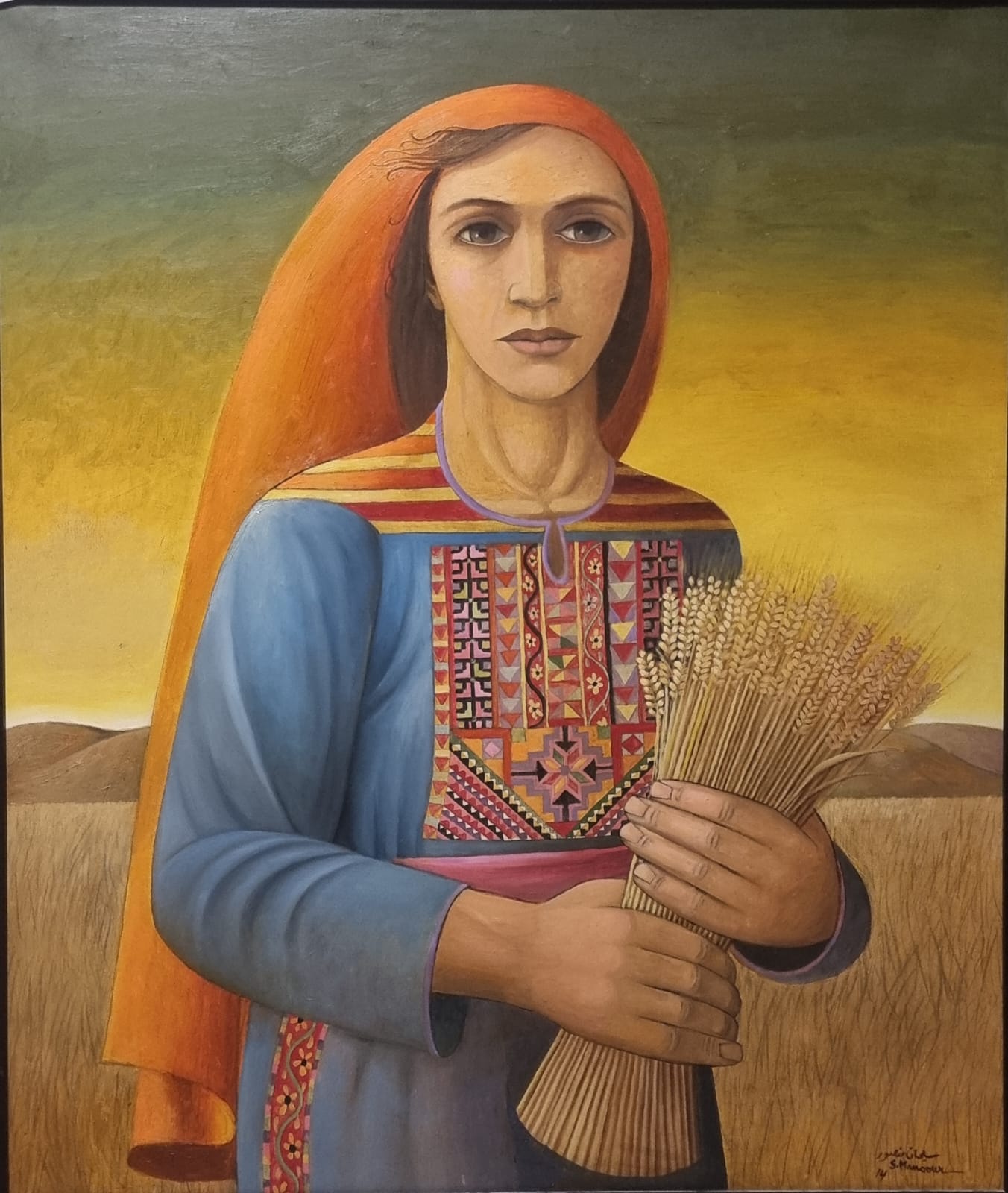
Sliman Mansour
Harvest, 2014
Oil on canvas, 115X86 cm
Farid Abu Shakra
Farid Abu Shakra
Year of Birth: 1963
Place of Birth: Umm el Fahem
Place of Residence: Umm el Fahem
Farid Abu Shakra is a multidisciplinary artist, curator, poet, art scholar, and lecturer at Oranim College. He was born in 1963 in Umm el-Fahem, the brother of the artist Walid Abu Shakra and of the artist Said Abu Shakra, the Director of the Umm el-Fahem Museum of Art. His mother, Maryam, was married by her family to an older man when she was only 12 years old, and had to raise seven children under conditions of scarcity and poverty, yet nonetheless raised a family of groundbreaking artists (1).
Farid Abu Shakra moved to Tel Aviv in 1984 to study at the Kalisher Art School, from which he graduated in 1988. In 1996 he established the Umm el Fahem Art Gallery together with his brother Said Abu Shakra, and when it became a museum in 2024 was appointed its Chief Curator. His studio and gallery are currently located on the bottom floor of his home, in the aim of creating a space for human connection and an in-depth cultural artistic discourse, as part of his work and creative space (2).
Farid Abu Shakra is one of the founders of the IBDAA Association for Improving Art in Arab Society in Kfar Yasif (1999), and a founding member of the art gallery in Nazareth (2008). He also teaches art and education at Oranim College. As part of his work as a curator and researcher, he contributes to the development of a corpus of theoretical and intellectual writings about local Palestinian art. These undertakings have made him one of the most prominent and influential figures in the local Palestinian art scene, as well as a model of an artist and educator who combines personal work with social responsibility.
Farid Abu Shakra’s artwork evokes memories, dreams and fears that threaten his Palestinian identity. He often combines western painting with eastern arabesque. Over many years of his artistic practice he has created his own unique language that combines charged symbolism with abstract values. In addition, as a researcher and poet, he explores his existence as a Palestinian Arab in the State of Israel, as part of a society composed of different cultures (3).
Farid Abu Shakra’s artwork often draws from elements of Palestinian personal and collective memory: soil, agricultural tools, childhood stories, the cactus bush, historical postal stamps, animals (such as cats and pigeons) and rural landscapes. According to the curator Shlomit Bauman, these recurring symbols are not only used as representations, but serve as a bridge between layers: past and present, personal identity and collective memory, nature and its fields and the political conflict (4). These elements are prominent for example in the work “Street Cat”, in which he combines the traditional beauty of ornamentation with pictures of fighter planes – a visual combination reflecting the existential rift experienced by the Palestinian citizen.
Farid Abu Shakra’s visual language is based on a blend of eastern ornamentation, Palestinian popular symbols and traditional techniques, with a contemporary adaptation that emphasizes the material and places it at the center of his artwork. Elements such as arabesques, embroidery, wooden patterns and plants, intersect with a modern style that tends toward the symbolic and the abstraction, and create a visual composition that balances ornamental aesthetics with its ideational expression. An example can be seen in his exhibition “Ground?”, in the work “Arabesque Figures on Wood”, in which the traditional ornamentation combines with abstract forms (5).
Farid Abu Shakra’s use of materials and mediums is broad and varied, and includes: painting, embroidery, sculpture, carving, wood, clay, leather, and combined mediums. The material is chosen to match the idea, and every material fills a symbolic function – paper embroidered with embroidery thread, carved wood, soil cast in the shape of fighter planes, a teddy bear, a girl’s shoes, or a doll with thorns of a cactus bush. The ground and soil are not only used as an abstract symbol but as a living organism, connecting human beings with their initial origins, body and material, belonging and fragility. The material itself becomes part of the story, imbuing the figurative form with symbolic and ironic meanings. “When I was young I didn’t have toys at home, and as an adult I feel that I want to compensate myself and allow myself to use dolls and teddy bears to convey human messages. A teddy bear, whatever we do with it, is relevant to all of us. Through them I try to explore the violence in the world, the violence against women, or men, or children. It is an attempt to convey a message in the simplest language. (6)”
In his works, Farid Abu Shakra is not afraid of examining both his otherness as a Palestinian artist living in Israel, as well as the traditional patriarchal society in which he lives (7). Bauman compares his work with materials to geological research through which he deciphers the different layers of the concept ‘soil’, both with agricultural tools which become almost ritual objects, as well as by creating an essential connection between his works and a laborious craft. This laboriousness is expressed in activities such as wood carving, metal inlaying, embroidery, perforation, and molding with soil. Similar to agricultural work (plowing or sowing), these activities require Sisyphean, precise and repetitive work at a very high skill level and with a deep understanding of the material and hand wisdom (8). The subject of gender is also present in his work, in which the ‘masculine’ and the ‘feminine’ merge, swap roles and demand redefinition on a non-binary spectrum.
Farid Abu Shakra draws inspiration from his ancient cultural heritage and eastern aesthetics, but reshapes and recasts them. The popular ornamentation and the historical symbols become tools for exploring questions about identity, soil and belonging in the current, tense, context. Mythological influences and patterns of eastern symbols are prominent in his works, always in direct relation to the present, in which Palestinian existence is formed in the movement between memory, the conflict, and the attempt to define oneself in a multicultural society (9).
Alongside the question of identity, in his art Farid Abu Shakra criticizes the inability to negotiate and navigate the subject of the occupation and the issue of the stuck peace process. In 2008, an exhibition of his works titled “Dead Letter Office” was displayed at the Tel Aviv Artists House, inspired by the postal service that collects undeliverable letters. His message passes through the huge postal offices in the United States and Europe, in which letters are stuck, some for hundreds of years and some already burned, because they lack the sender or the recipient’s address, and therefore were never opened and did not reach their destination. A situation in which messages, even those that could perhaps solve the most difficult problems facing the world, will never reach their destination (10).
In addition to his work as an artist, Farid Abu Shakra has written several poetry books, among them: The Song of Liberation (1991-1995), The Colors of the Sunset (1993), Abdullah: The Song of the Body (2013), and The Collection of All songs (2014). His poetry, as a form of personal expression, identity and human experience, complements his visual work and makes him a multidisciplinary artist.
- Said Abu Shakra, Maryam, Schocken, Tel Aviv, 2023
- “The Farid Abu Shakra Studio, Umm el-Fahem Art Gallery
- “Farid Abu Shakra: multidisciplinary artist, lecturer at Oranim College, writer, poet, researcher and curator”, Givat Haviva Shared Art Center
- Shlomit Bauman, “Ground? / Farid Abu Shakra”, Benyamini Contemporary Ceramics Center, April 2024
- Reut Barnea, “Ground – For What Reason (and Why?) Farid Abu Shakra at Benyamini Center”, Portfolio, 11.5.24
- Ibid.
- Shlomit Bauman, “Ground? / Farid Abu Shakra”
- Ibid.
- Micky Harel, “Between the Beautiful and the Wounding: Searching for Identity and Internal Truth”, Bread and Roses, 2012
- “Farid Abu Shakra: multidisciplinary artist, lecturer at Oranim College, writer, poet, researcher and curator”, Givat Haviva Shared Art Center
Sources
Exhibitions – מתוך המאגר של מרכז המידע של מוזיאון ישראל, ירושלים
Feature Stories and Articles –
פריד אבו שקרה, זהות האמן הפלסטיני: בין מסורת, תרבות, מודרנה וגלובליזציה, עמותת אלסבאר, הגלריה לאמנות אום אל-פחם, 2015 –
A catalog book in which Farid Abu Shakra examines the dualistic space of a Palestinian artist, between tradition, culture, modernity and globalization. The book lays the foundations for the study of the development of Palestinian art and examines how modernism in Palestinian society views the past, as well as the nature of the relationship between the two
Said Abu Shakra, Maryam, Schocken, Tel Aviv, 2023 –
Said Abu Shakra’s (Farid’s brother) autobiographical book which presents the mother of the family, Maryam. Despite her young age, poverty, and loneliness, she successfully raised her children who became important artists of their generation
מיקי הראל, "בין היפה לפוצע: בחיפוש אחר זהות ואמת פנימית", לחם ושושנים, 2012
Examines Farid Abu Shakra’s exhibitions through the question of identity and the constant search for it. The text was written following a conversation with the artist
שלומית באומן, "אדםמה? / פריד אבו שקרה", בית בנימיני המרכז לקרמיקה עכשווית, אפריל 2024
Text of the curator Shlomit Bauman about the exhibition “Ground?”
רעות ברנע, "אדמה – על שום מה (ולמה)? פריד אבו שקרה בבית בנימיני", פורטפוליו, 11.5.24
An interview with Farid Abu Shakra about his solo exhibition “Ground?”, about the meaning of soil as a material used in his artwork, and about the ways in which through this material he explores place, identity, gender and memory
"הסטודיו של פריד אבו שקרה", הגלריה לאמנות אום אל-פחם
Content from the website of the Umm el-Fahem Museum of Art, describing Farid Abu Shakra’s return to Umm el-Fahem and the studio he built in his home
"פריד אבו שקרה: אמן רב תחומי, מרצה במכללת אורנים, סופר, משורר, חוקר ואוצר", המרכז המשותף לאמנות גבעת חביבה
The artist’s page describing the characteristics of Farid Abu Shakra’s work, the style of his artworks and the subjects of his art
הראל, מיקי, בין היפה לפוצע: בחיפוש אחר זהות ואמת פנימית, לחם ושושנים, 2012
פריד אבו שקרה, "טקס טקסט טקסטיל טקסטורה", היכל התרבות נתניה
A text written by Farid Abu Shakra for a group exhibition he curated in which he examines the history of how art treats the written word
Interviews –
"פריד אבו שקרה", דוד וגוליית, 2016
An interview with Farid Abu Shakra about his works in the exhibition “Painting Camp #5” at the Contemporary Art Station Ramla in 2012
שיח גלריה בתערוכה אדםמה? / פריד אבו שקרה", בית בנימיני, 2024
An interview with Farid Abu Shakra about the exhibition “Ground?” displayed at the Benyamini Center
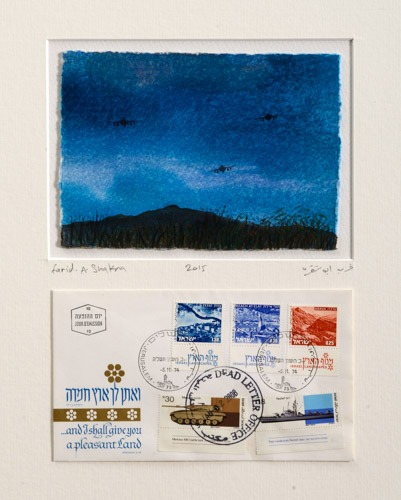
Farid Abu Shakra
From the country’s landscapes, 2015
mixed technique, 36X34 cm